
Revisiting The False Binary: Unilateral vs. Bilateral Training Is Still the Wrong Question
Apparently unilateral vs. bilateral training is a debate again, which is convenient because we wrote about it in May of 2025. Back then, we called the debate a false binary and argued that asking whether single-leg or double-leg training was “better” was a little like asking whether a screwdriver was better than a hammer. What makes it especially worth revisiting is that several other Newman HP articles we have written since then fit directly into the same discussion, while we still see people trying to turn the topic into a binary choice. It is not about picking sides. It is about understanding what problem you are trying to solve, what adaptation you are trying to create, and which tool makes the most sense for the athlete standing in front of you. Strength and conditioning has always had an attraction to black-and-white answers.The same exercise can be extremely valuable for one athlete, unnecessary for another, and poorly timed for a third. A rear-foot-elevated split squat can be used to create hypertrophy, challenge coordination, expose mobility, load tissue during rehabilitation, or build strength. A back squat can build maximal force, expose a restriction, increase tissue capacity, or simply create more fatigue than an athlete needs at that moment.
The exercise does not tell you what the program is doing. The context does. That was already clear in our original False Binary piece in 2025, where we argued that the better question was not whether unilateral or bilateral training was superior, but what dose and combination of each would best drive adaptation, resilience, and performance. That is exactly why we are excited to come back to this conversation now. Since then, we have written several other pieces that connect directly to this topic, and together they give us a chance to go deeper on why context matters, how different tools create different demands, and how exercise selection should change as the needs, limitations, and goals of the individual change.
What Are You Actually Training?
“Unilateral” and “bilateral” describe how a task is organized. They do not tell you what adaptation the athlete is receiving. That seems obvious, but much of the debate skips directly from the exercise category to conclusions about what the exercise must be doing.
Unilateral exercises are often praised because they require more balance, stabilization, coordination, or muscle activation. All of those qualities can be useful, but none of them automatically means that the exercise is a better stimulus for maximal strength or power. This distinction needs to be highlighted because muscle activation and force production are not the same thing. A muscle can show high EMG activity while relatively little external force is being produced, particularly when additional activity is being used to stabilize a joint or position. Co-contraction is part of that equation: opposing muscle groups can become more active at the same time to increase stiffness and control, even though that activity does not necessarily increase the net force available to move an external load. In a unilateral task, the nervous system may be distributing effort across force production, posture, pelvic control, balance, and stabilization, while a more stable bilateral movement may allow a greater portion of the available output to be directed toward the load itself.
This becomes even more important when we think about how tissue is organized during movement. Change the stance, joint angle, center of mass, external load, velocity, direction of force, contraction type, or stability demand and you have changed the task. The muscles involved may look similar on an anatomy chart, but the nervous system now has to coordinate them under a different set of mechanical conditions. Small changes in position can change leverage, muscle length, force direction, sensory information, and the coordination required to solve the movement.
That is one reason variation can be valuable. Athletes benefit from learning to produce and manage force across different positions and configurations. However, it is important not to confuse a more complicated organizational problem, or an exercise that simply feels harder, with a superior force-production stimulus. An exercise can be incredibly demanding from a coordination or stability standpoint while simultaneously limiting the amount of force the athlete is able to apply externally. Difficulty, complexity, and output are not the same thing.
Why 250 pounds per Leg Does Not Equal 500
One of the most seductive arguments in favor of heavy unilateral training comes from simple arithmetic. It is tempting to conclude that an athlete who can perform a 250-pound rear-foot-elevated split squat can therefore automatically back squat 500 pounds. That assumption cannot be made. The two exercises are geometrically different tasks, with different stances, leverage, stability demands, and force distributions. That alone makes the loads difficult to compare directly, but the more important difference is neurological.
In an NSCA presentation examining how the nervous system responds as resistance increases, William Kraemer showed EEG data comparing very light, moderate, and heavy squat loading. EEG measures electrical activity from the brain, and as load and force demands increased, the estimated cortical activity became more closely associated with M1, the primary motor cortex, while progressively higher-threshold motor units were recruited and driven at higher discharge frequencies. A 250-pound rear-foot-elevated split squat can absolutely create a very high neural and muscular demand in the working leg, but that does not make it neurologically equivalent to a 500-pound back squat. In the bilateral task, the nervous system must simultaneously organize high-force output from both sides against the larger total force demand. Research on the bilateral deficit shows that the nervous system does not simply take the force one limb can produce independently and double it when both limbs work together. Neural drive and cortical activity can change when the task changes from unilateral to bilateral, meaning 250 pounds on one leg is not simply half of the same neurological event as 500 pounds on two.
Research on the bilateral deficit makes the arithmetic even less useful. Differences in neural drive and cortical activity have been observed between unilateral and bilateral maximal efforts. The 2021 paper, Differences in Brain Structure and Theta Burst Stimulation-Induced Plasticity Implicate the Corticomotor System in Loss of Function After Musculoskeletal Injury, gives a good example of how interconnected the system can be. The researchers studied women roughly three years after a unilateral ACL rupture and still found reduced function in the injured quadriceps, but they also found compensatory changes in the uninjured quadriceps and both hamstrings, along with injury-related changes in corticospinal excitability and brain structure. During maximal bilateral lower-body contractions, the injured group used less quadriceps activity on the injured side, more quadriceps activity on the opposite side, and greater hamstring activity bilaterally. The authors concluded that the adaptations following the unilateral injury appeared to involve both hemispheres of the brain. A problem that began in one knee had changed how the larger neuromuscular system organized a bilateral task years later. That is a much better model than treating the right and left sides as two isolated systems whose outputs can simply be added together.
Different Tools, Different Outcomes
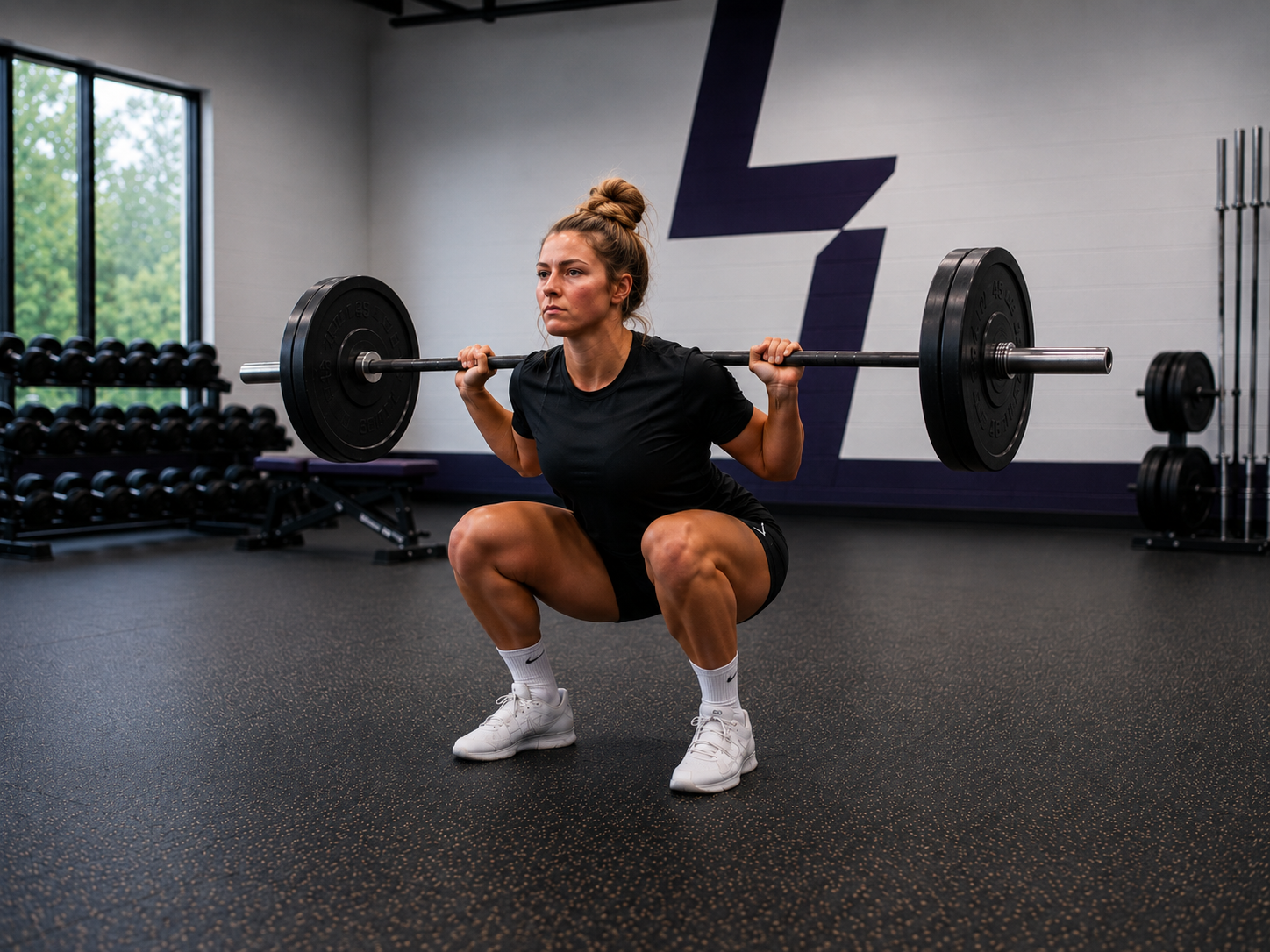
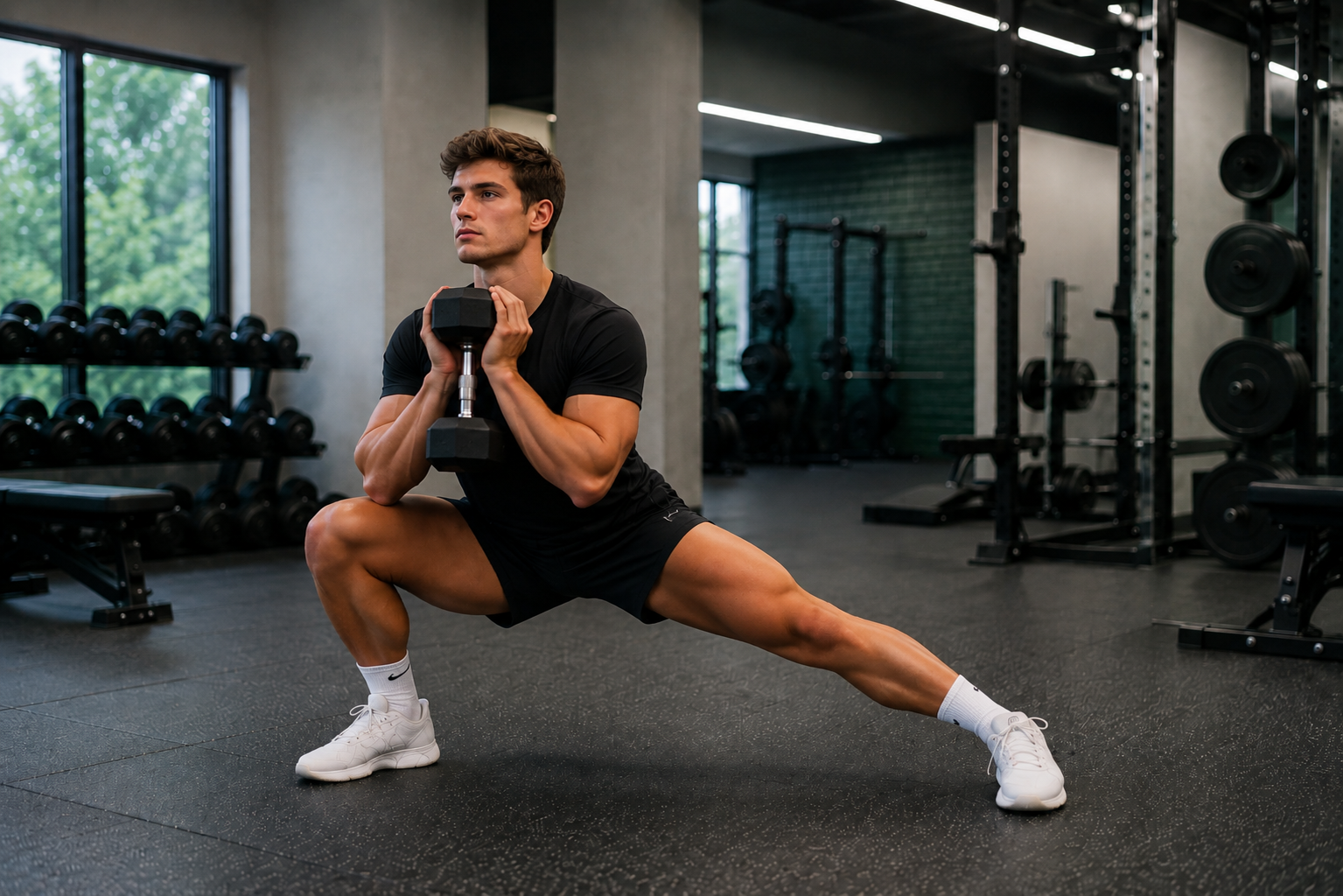
Once unilateral and bilateral training stop competing for ideological supremacy, both become more useful. Stable bilateral exercises are often excellent tools for developing high levels of force because they allow an athlete to apply large outputs against an external load without balance or positional control becoming the dominant limiter. Unilateral exercises can create different opportunities by changing joint positions, altering the distribution of load, challenging coordination, exposing asymmetries or restrictions, and asking the athlete to express force from a different base of support.
This is where the phrase “functional training” often creates more confusion than clarity. A unilateral movement may look more like something that occurs in sport, but resemblance alone does not tell us whether the exercise provides the adaptation the athlete needs. If maximal force production is the current limitation, deliberately increasing the balance and coordination demands of the exercise may make it less efficient for solving that particular problem. The athlete may be working extremely hard, but a larger portion of that effort is being spent organizing the movement rather than producing the highest possible external force.
The opposite is also true. If the athlete already possesses plenty of general force and the problem is positional control, coordination, a specific expression of force, or the ability to manage load in a unilateral configuration, the extra demands of the unilateral exercise may be the entire reason it belongs in the program. Variation therefore has real value, but variation for its own sake is not the goal. Exposing athletes to different positions and movement solutions can expand their available options and help build a more adaptable system. That does not mean the most coordinatively complicated exercise is automatically the best way to increase force or power. The tool still has to match the outcome.
Start With the Athlete
The unilateral versus bilateral debate becomes much easier to manage when the athlete comes before the exercise. One hierarchy we use at Newman HP is simple: eliminate weaknesses, reach floors, overemphasize strengths. That hierarchy does not tell us in advance whether an athlete should be doing more unilateral or bilateral work. It tells us what problem deserves the training priority, which is what should determine the tool in the first place.
Eliminating weaknesses can mean a lot of different things. An injured athlete needs to address that recovery and rehab before normal development can continue. Another athlete may have a mobility restriction, a tissue-capacity problem, or a glaring physical deficiency that is limiting what they can currently do. Any of those problems could lead us toward a unilateral exercise, a bilateral exercise, or something else entirely. The point is that we should not start with “this athlete needs more single-leg work” or “this athlete needs more bilateral strength.” We should start by identifying the limitation and then choose the exercise that gives us the best way to address it.
Once those major limitations are being addressed, the athlete needs to reach the physical floors required by their sport and position. The Newman HP Athlete Composite helps define what those floors actually are because they are not the same for every athlete. A soccer player may need minimum levels of acceleration, repeat-sprint ability, aerobic capacity, relative strength, power, and change-of-direction ability, while the relevant floors for a volleyball player or rugby player will look different. Even after those standards have been identified, though, not every deficiency deserves equal emphasis.
This is where the Epley Index becomes useful. The Index places the vertical jump, 10-yard dash, and pro agility on a common scoring scale, allowing us to see the shape of the athlete’s physical profile rather than just a list of test results. If an athlete is below several of their identified performance floors but one quality is dramatically farther away than the others, that may be the most important place to direct training. Once that priority is clear, the unilateral versus bilateral question becomes much more useful. If the athlete’s largest problem is general force production, a stable bilateral exercise may give us the cleanest way to attack it. If the larger issue is how force is expressed in a unilateral position, braking, positional control, or another more specific problem, a unilateral tool may provide a better stimulus. The test results do not select the exercise for us, but they give us a much better idea of what the exercises are thatwould be especially helpful.
The same thinking applies when we overemphasize strengths. If the fastest player in the league is going to get paid because he is the fastest player in the league, there may be enormous value in continuing to develop that quality rather than trying to make every lesser attribute look perfectly balanced. That does not mean the athlete stops training everything else, and it does not mean speed had to wait until every floor was perfect. It means training emphasis should reflect what matters most at that point. As weaknesses shrink, floors are reached, and priorities change, the balance of unilateral and bilateral work can change with them.
That is why there is no universal unilateral-to-bilateral ratio that makes sense for every athlete. The hierarchy helps us decide what deserves attention first. The Athlete Composite and Epley Index help us identify where the athlete stands relative to those priorities. We are choosing between tools based on the adaptation we actually need rather than starting with the tool and trying to justify it afterward.
Schaefer’s Law and the Order of Force
In June, we published Schaefer’s Law: Ten Years Later, revisiting Dr. Dan Schaefer’s roadmap for developing force expression. The progression is straightforward: first build enough bilateral strength to produce high levels of force, then develop the ability to move meaningful loads faster, and finally shift toward more sport-specific expressions of force. In that article, the first two checkpoints were represented by roughly a double-bodyweight back squat and moving bodyweight in the squat at about one meter per second before progressing into the third stage.
That sequence lines up closely with the four tiers we outlined in the original False Binary article: base bilateral strength, speed under bilateral load, controlled single-leg loading, and sport-specific dynamic loading. The exact strength thresholds are not identical, but the progression is almost the same. Tiers one and two correspond closely with the first two stages of Schaefer’s Law, while tiers three and four fit within the final stage, where force expression becomes increasingly specific to the athlete and the demands of the sport.
Looking at the two models together gives us a useful way to think about unilateral and bilateral training through the lens of force expression. When an athlete still needs to raise their general force capacity, stable bilateral loading gives us a very efficient way to create high-force exposures. Once that capacity is better developed, training can begin asking the athlete to express force faster and through a wider variety of positions and tasks. Controlled unilateral loading becomes one of the tools available during that progression, along with jumps, plyometrics, medicine balls, sprinting, braking, and other more specific forms of force expression.
This also explains why simply choosing the exercise that looks most like sport can miss the larger development problem. Sport already exposes athletes to enormous amounts of unilateral and asymmetrical force. The weight room gives us an opportunity to build capacities that may be harder to overload in the sporting environment itself. If force production is still the limiting quality, a bilateral exercise may provide the strongest return. As the athlete’s needs shift toward expressing that force in specific positions, directions, and time constraints, unilateral work can take on a larger role.
The third stage of Schaefer’s Law is intentionally broad because the correct tool depends increasingly on the athlete. In Schaefer’s Law: Ten Years Later, we described this as the point where the athlete’s composite and sport begin to dictate what comes next. A lineman, pitcher, golfer, and volleyball player may all need force, but the way they eventually need to express it can be very different. The same applies to unilateral and bilateral loading. Their value changes as the training problem changes.
When looked at together, the False Binary tiers and Schaefer’s Law give us a progression from general force production toward increasingly specific force expression. Bilateral and unilateral exercises both have important places inside that progression, and their emphasis can change as the athlete develops. Thinking about them through force expression gives the coach a much more useful question than simply asking which category is better.
Why the Answer Changes as the Athlete Gets Better
The same athlete may need a different answer to the unilateral versus bilateral question at different stages of development. Practical Programming for Strength Training provides a useful and, appropriately enough, practical way to think about this through the distinction between novice, intermediate, and advanced trainees. Those categories are largely based on the biological rate at which an athlete can adapt to training. A novice can be exposed to a relatively small stress, recover, and come back better within 48 to 72 hours. As the athlete becomes more adapted to that stress, it takes a larger and more carefully organized stimulus to produce another change, while the time required to recover and adapt generally gets longer.
That is why beginner gains can happen almost comically fast. A new lifter may add weight from workout to workout, while an advanced athlete can spend weeks or months trying to produce a relatively small improvement. At the extreme end, athletes operating near world-record levels may spend years chasing changes that a beginner could make in a few training sessions. The closer an athlete gets to their potential, the slower and more expensive adaptation becomes, which makes the choice and organization of the training stress increasingly important.
The Nested Systems model helps explain why. An athlete is not one biological system recovering from one training stress. Muscle, tendon, bone, the nervous system, glycogen stores, hydration, inflammatory processes, sleep, nutrition, and psychological stress all interact, and they do not recover or adapt on identical timelines. Early in development, the athlete has enough room below their ceiling that the system is relatively forgiving. Outputs are lower, the cost of each exposure is smaller, and general training can improve several qualities at once.
As the athlete improves, the situation changes. Stronger athletes generate greater forces during heavy training. Faster athletes put greater forces into the ground during sprinting. More powerful athletes create higher outputs that the tissues and nervous system have to tolerate and recover from. The same category of training becomes more expensive because the athlete is capable of producing more stress with it.
At the same time, the number of major limitations usually decreases. The novice might need more muscle, more force, better coordination, more tissue capacity, and basic competency across almost everything. Broad training can solve several of those problems simultaneously. An intermediate athlete begins to develop a more distinct profile, with some qualities advancing faster than others. The advanced athlete may already possess most of the general qualities required for performance, leaving only a small number of meaningful constraints worth pursuing.
That is why advanced programming becomes more specific. It is not because advanced athletes need fancier exercises. It is because fewer things are still limiting them, while the cost of creating unnecessary stress has gone up. At that point, good programming becomes an exercise in moving the system that needs to move without carelessly taxing everything else.
This is also why it becomes increasingly difficult to give universal answers about exercise selection as athlete level rises. A novice may improve from either a squat or split squat because so many qualities are underdeveloped. For an advanced athlete, the difference between those tools may matter enormously because the training is now trying to solve a much narrower problem. The more developed the athlete becomes, the more important it is to understand exactly why an exercise is in the program.
The bigger Picture
Unilateral and bilateral training are both parts of a much larger programming picture. Bilateral movements often give us an efficient way to produce high levels of force and power because the stability of the task allows more output to be directed into the external load. Unilateral movements create different organizational demands and can be valuable for coordination, positional control, mobility, rehabilitation, tissue loading, variation, and more specific expressions of force. Those differences make both useful, but the number of feet on the ground still tells us very little about whether an exercise belongs in a program.
Exercise selection starts with the adaptation we are trying to create and the athlete we are trying to create it in. The Newman HP hierarchy helps us decide what deserves priority. The Athlete Composite and Epley Index help identify where the athlete currently sits and what should be emphasized in training. Schaefer’s Law helps organize the progression from general force production toward faster and more specific force expression. Practical Programming and the Nested Systems model help explain why the appropriate training stress changes as an athlete becomes more developed. Unilateral and bilateral exercises are tools that live inside all of those decisions.
This is why we keep coming back to context. What is limiting the athlete? What adaptation are we trying to create? Which task gives us the strongest signal for that adaptation at an acceptable cost? Once those questions are answered, the unilateral versus bilateral decision becomes much more useful. We can see each one for what it is: a tool with certain strengths, certain limitations, and a specific role depending on the adaptation we are trying to create.
We called this a false binary in 2025, and the additional work we have published since then fits comfortably into the same idea. The athlete is adapting across multiple interacting systems, the body is organizing tissue around the task it is given, and the coach is trying to direct all of that toward a specific outcome. Single-leg and double-leg training are simply two tools for creating different training demands. The bigger picture is knowing when each one helps solve the problem in front of you.
ABOUT THE AUTHOR
Ben Kaiserman is a senior partner at Newman HP, where he works with professional and collegiate athletes across the MLB, NFL, PLL, NCAA, and professional lacrosse. Prior to joining Newman HP, he served as an H2F Strength and Conditioning Coach with the U.S. Army’s 101st Airborne Division, working with tactical athletes in a high-performance military setting. He holds a Master’s in Sports Administration from Tusculum University and is a Certified Strength and Conditioning Specialist (CSCS) through the NSCA. He previously served as Director of Sports Performance at Tusculum University and has also worked with athletes at UCLA, Yale, the University of Tennessee, and Sacramento State.
Frequently Asked Questions
Is unilateral or bilateral training better for athletes?
Neither is universally better. Bilateral and unilateral describe how an exercise is organized, not the adaptation it automatically creates. Bilateral exercises often allow greater external loading and can be especially useful when maximal force production is the priority. Unilateral exercises can be valuable for coordination, positional control, rehabilitation, variation, and specific expressions of force. The better choice depends on the athlete, the adaptation being targeted, and where that athlete currently sits in development. Research comparing the two approaches also shows a strong specificity effect: unilateral training tends to transfer better to unilateral tasks, while bilateral training tends to transfer better to bilateral tasks.
Does a 250-pound split squat on each leg equal a 500-pound bilateral squat?
No. The two exercises represent different mechanical and neurological tasks. Changing from unilateral to bilateral loading changes the base of support, joint positions, stabilization demands, force distribution, leverage, and the way the nervous system organizes the movement. Research on the bilateral deficit also shows that maximal bilateral force does not necessarily equal the mathematical sum of the two limbs tested independently.
What is the bilateral deficit?
The bilateral deficit describes the tendency, in some movements and individuals, for the force produced by both limbs simultaneously to be lower than the sum of the forces those limbs can produce separately. It is not universal, and its magnitude depends on factors including the movement, stability requirements, training history, biomechanics, and task familiarity. Neural mechanisms, including differences in cortical activation and interhemispheric interaction, have also been proposed.
Are unilateral exercises more functional because they require more stabilization?
Not automatically. Additional stabilization can be useful when stabilization, coordination, or positional control is part of the adaptation you want. It can also reduce the amount of external force the athlete is able to produce. An exercise becoming more difficult to organize does not necessarily make it a better strength or power exercise. The question is whether those additional demands help solve the athlete’s current problem.
When should bilateral training be emphasized?
Bilateral exercises often make sense when the athlete needs to increase general force-producing capacity and the coach wants stability to support high external loading. Schaefer’s Law reflects this logic by first establishing sufficient force production before shifting toward faster and eventually more specific expressions of force. That does not mean every athlete has to follow one universal exercise progression. It means the tool should reflect the quality that currently needs development.
When should unilateral training be emphasized?
Unilateral training can be useful when the athlete needs a specific positional exposure, coordination demand, rehabilitation progression, tissue-loading strategy, mobility solution, or expression of force that a bilateral task does not provide as effectively. It can also simply provide valuable variation. The reason for using it should come from the athlete and the desired adaptation rather than from the belief that single-leg training is inherently more athletic.
Should beginners and advanced athletes use the same exercises?
They may use some of the same exercises, but the reasoning behind the program changes substantially. Novices can often improve many qualities simultaneously from relatively general training because they are far from their physical ceiling. As athletes become more advanced, adaptation slows, outputs become more costly, and the number of meaningful limitations usually becomes smaller. Exercise selection therefore tends to become more precise as development progresses. The novice, intermediate, and advanced framework in Practical Programming for Strength Training describes this same progression through increasingly long and complex stress-recovery-adaptation cycles.
How should coaches decide which exercises an athlete needs?
Start with the athlete rather than the exercise. At Newman HP, we use the hierarchy eliminate weaknesses, reach floors, overemphasize strengths. Determine what is limiting development, identify the physical floors required by the athlete’s sport and position, and then decide which qualities deserve further emphasis. Only after those questions are answered does unilateral versus bilateral become a useful exercise-selection question.
Contact Us
To talk to us about programming, contact Newman HP
References
Behm, D. G., & Anderson, K. G. (2006). The role of instability with resistance training. Journal of Strength and Conditioning Research, 20(3), 716–722. DOI: 10.1519/R-18475.1.
Flanagan, S. D., Proessl, F., Dunn-Lewis, C., Sterczala, A. J., Connaboy, C., Canino, M. C., Beethe, A. Z., Eagle, S. R., Szivak, T. K., Onate, J. A., Volek, J. S., Maresh, C. M., Kaeding, C. C., & Kraemer, W. J. (2021). Differences in brain structure and theta burst stimulation-induced plasticity implicate the corticomotor system in loss of function after musculoskeletal injury. Journal of Neurophysiology, 125(4), 1006–1021. DOI: 10.1152/jn.00689.2020.
Kraemer, W. J. (2026). From Strength to Sports Science: The Evolving Art of Program Design [Conference presentation]. NSCA National Conference.
Post, M., van Duinen, H., Steens, A., Renken, R., Kuipers, B., Maurits, N., & Zijdewind, I. (2007). Reduced cortical activity during maximal bilateral contractions of the index finger. NeuroImage, 35(1), 16–27. DOI: 10.1016/j.neuroimage.2006.11.050.
Rippetoe, M., & Baker, A. (2013). Practical Programming for Strength Training (3rd ed.). The Aasgaard Company.
Škarabot, J., Cronin, N., Strojnik, V., & Avela, J. (2016). Bilateral deficit in maximal force production. European Journal of Applied Physiology, 116(11–12), 2057–2084. DOI: 10.1007/s00421-016-3458-z.
Uysal, A. A., Bereket Yücel, S., Stone, M. H., & Carroll, K. (2026). Bilateral deficit in exercise and sport: A narrative review. Journal of Strength and Conditioning Research, 40(7), 843–873. DOI: 10.1519/JSC.0000000000005490.
Zhang, W., Chen, X., Xu, K., Xie, H., Li, D., Ding, S., & Sun, J. (2023). Effect of unilateral training and bilateral training on physical performance: A meta-analysis. Frontiers in Physiology, 14, 1128250. DOI: 10.3389/fphys.2023.1128250.
