When Is It Okay for Kids to Start Lifting Weights? A 20-Year Perspective for Parents
Every week, somewhere in America, a parent makes the same decision. Their child got cut from a team, struggled through a season, or came home looking smaller than the kids they used to dominate on the field. Something has to change. So the family signs up for training, and the search begins for the program, the trainer, or the package that will fix the problem.
I have spent more than 20 years inside that conversation. I have worked with athletes at every level, from Yale National Champions to MLB pitchers to US Army Special Forces candidates, and I can tell you that the moment a family enters the youth training world for the wrong reason is almost always the moment they walk into the most expensive trap in youth sports.
So let me offer something more useful than a single age recommendation or a sales pitch. I want to give you a framework that will serve your child for the next twenty years, whether they become a professional athlete or a professional anything else. Because every child you raise is going to go pro. The vast majority of them will simply do it outside of athletics. The question is whether the weight room becomes part of the foundation that gets them there.
Why Young Athletes Actually Need Strength Training
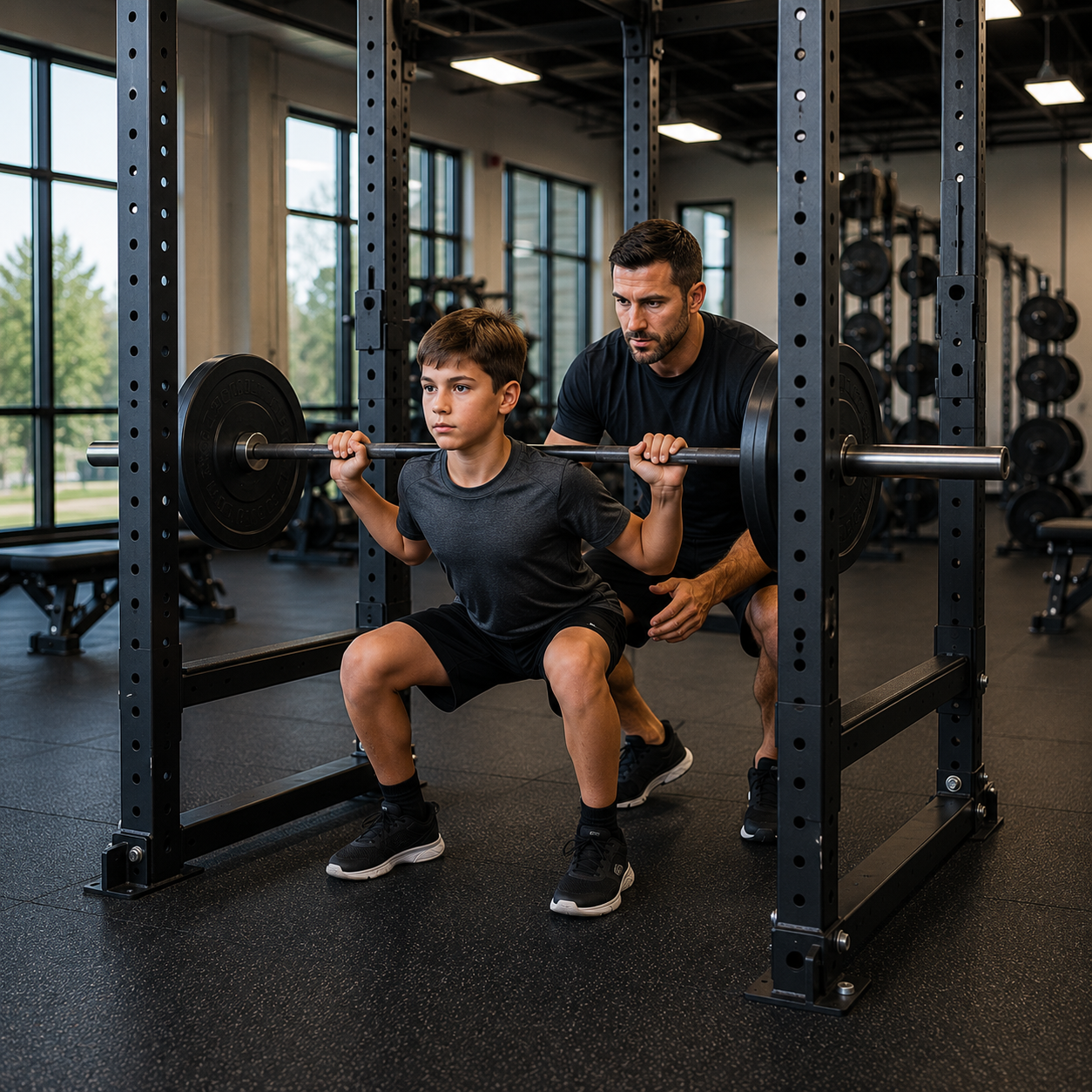
The most powerful reason to introduce structured training during the middle school years has very little to do with building muscle. The physiological adaptations are real and measurable, of course, and the National Strength and Conditioning Association's position statement on youthresistance training makes the safety and benefits clear when programs are appropriately designed and supervised. But the physical changes are honestly the smallest part of the equation at that age.
What training really offers a young person is the chance to practice three of the most important skills any human being can develop. The first is delayed gratification. The second is investment in themselves over a long time horizon. The third is the daily practice of making choices that run counter to the impulsive brain. At ten, eleven, and twelve years old, the prefrontal cortex is still very much under construction, and the weight room becomes one of the most effective classrooms in the world for teaching impulse control through embodied experience.
The cognitive research over the past decade has been remarkable. A systematic review andmeta-analysis published in Frontiers in Psychology found that physical exercise produces significant improvements in attention, memory, and executive function in adolescents, with measurable changes in cerebral blood flow and connectivity between the cerebellum and prefrontal cortex. Earlier work by Hillman and colleagues, summarized in Exercise, Cognition,and the Adolescent Brain, demonstrated that the developmental window of adolescence may be a uniquely sensitive period for exercise to shape long-term neural and cognitive outcomes.
Your child is building hardware that will run their software for the next sixty years. That is the long view that should drive every training decision a parent makes during the developmental years.
The Right Age to Begin Structured Strength Training
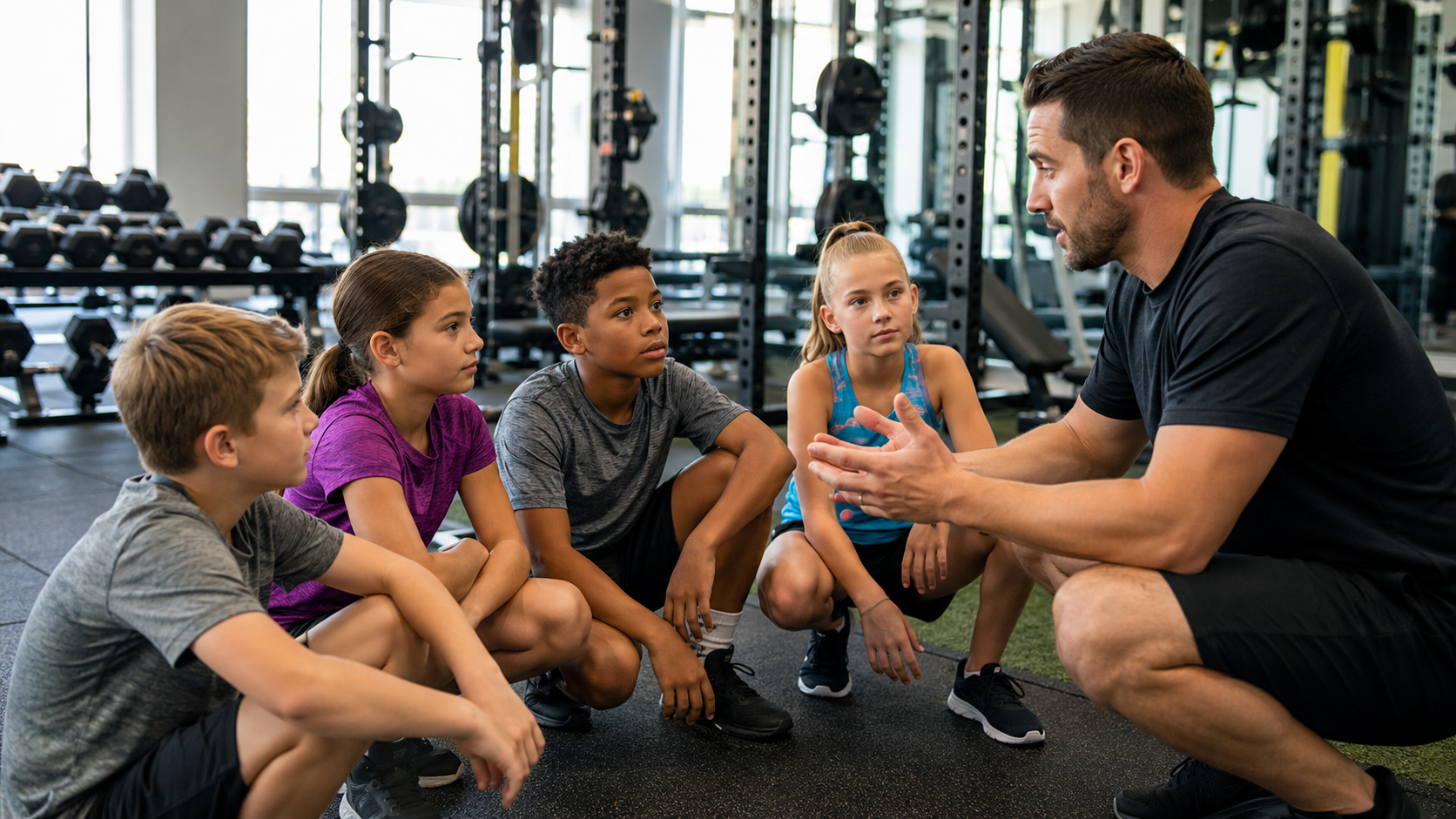
For most young athletes, structured strength training can responsibly begin around the middle school years. Both the physiology and the psychology are typically ready to benefit from a thoughtful program at that stage of development. The2014 International Consensus positionstatement on youth resistance training, led by Rhodri Lloyd and endorsed by an international panel of experts, makes clear that age itself matters less than the principles of progression, supervision, and individualization.
The biggest mistake parents and coaches make is tunneling in on a single physical attribute. Sprint speed. Pitching velocity. Vertical jump. Maximum strength. When a young athlete is just beginning, that kind of narrow focus removes everything that makes early training valuable. A young athlete is not a small adult. The loading schemes and periodization models designed for grown bodies assume a level of physiological adaptation that simply has not arrived yet.
Much of the meaningful change in a prepubescent and early-pubescent body actually happens through coordination, balance, and motor skill acquisition. Limbs are growing at uneven rates. Body mass is shifting. Levers are getting longer almost monthly. Picture trying to operate a marionette puppet where the strings change length every week and the limbs swap sizes overnight. That is the daily reality inside a growing young athlete. It is a massive coordination challenge, and it can be especially frustrating for a gifted kid who experienced early success and is now struggling to figure out their new body. The role of training during this window is to give them tools, patience, and consistency rather than to maximize an output that the body is not yet equipped to express.
What to Look For in a Trainer or Gym
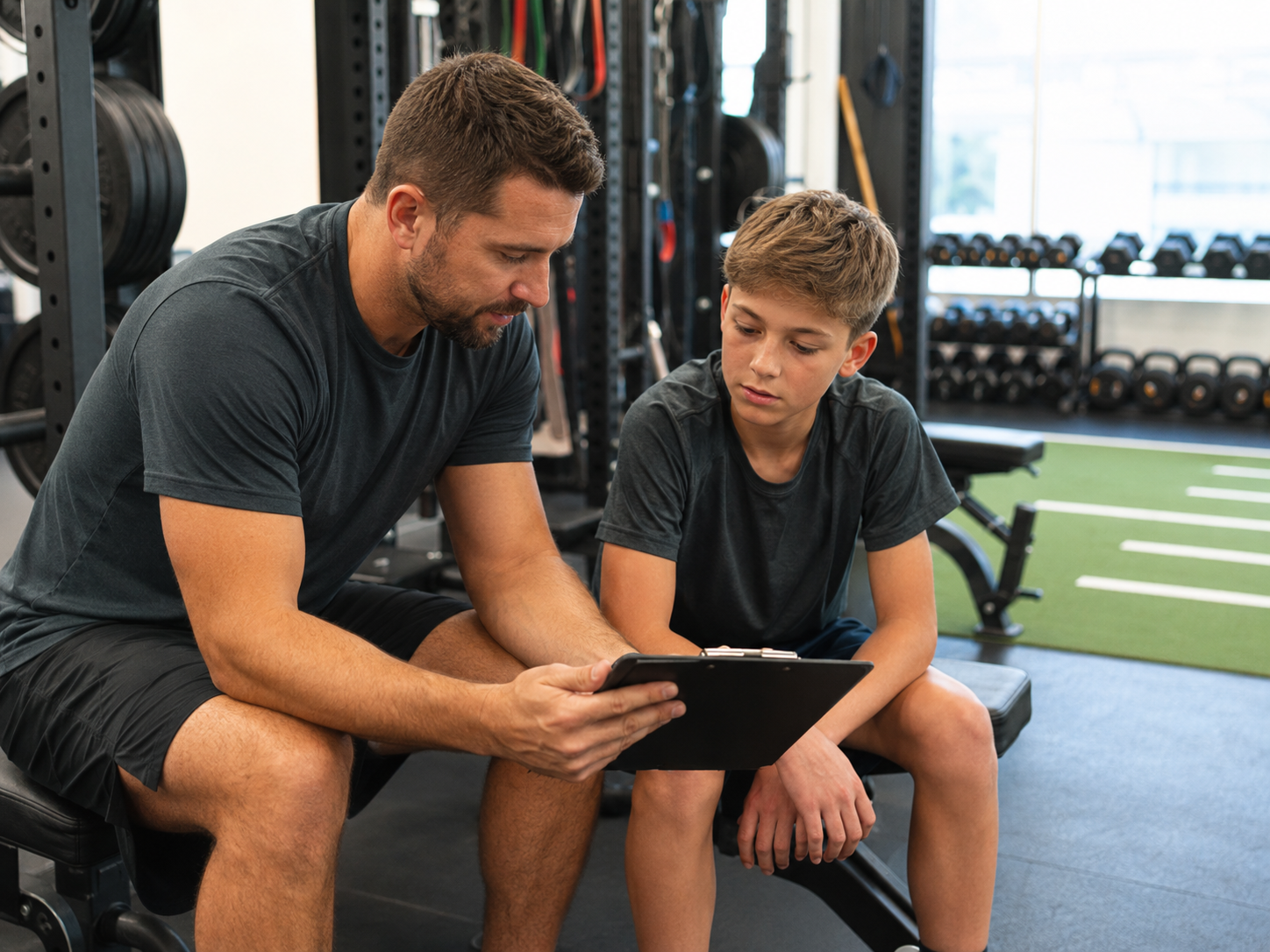
When you walk into a facility with your young athlete, you are not really evaluating the equipment. You are evaluating an environment that will shape your child's relationship with effort, with their body, and with the people who guide them. A few things will tell you almost everything you need to know within the first visit.
Look first at the programs being run on the floor. The athletes in the gym should be following individualized plans built around their profile. If it looks like gym class with weights, where a group of kids does the same movements at the same time with no apparent reason for the choices, the environment is not built for development. It is built for throughput.
Next, look at the credentials. The Certified Strength and Conditioning Specialist credential from the National Strength and Conditioning Association sets the recognized professional standard in the United States. It is not a guarantee of quality, but it tells you the trainer has met a meaningful educational and ethical threshold.
Finally, ask to speak with a family whose young athlete has trained at the facility for several years. Spend ten minutes with that athlete. Notice how they carry themselves. Notice their posture. Watch whether they hold the door open for the next person walking through. The hallmarks of athletes raised in the right environment are almost universally observable. Parents have told me for years that they can spot our athletes in a crowd because of their pull-up capacity, their posture, and the small courtesies they extend without being asked. That is what a process-driven environment produces over time.
The Industry Problem Parents Need to Understand
Every sport has its subculture guru promising a transformation. The traps exist because the youth sports industry knows that parents will pay almost any amount of money to give their child an edge. Once a family starts paying, sunk cost reasoning takes over, and the cycle continues with bigger packages, more sessions, and an ever-growing emotional investment in a single outcome.
This singular, outcome-based approach is the most expensive trap in youth athletics. It conditions a young athlete to tie their self-worth to a result that may or may not arrive. It teaches them that the work only matters if it produces the scholarship, the contract, or the trophy. The wiring that becomes the most durable in adulthood is wiring built on process, on showing up, on doing the work because it is worth doing.
Stanford psychologist Carol Dweck has spent decades researching exactly this dynamic. Her work on growth mindset has demonstrated that children praised for effort and process rather than ability or outcome become more resilient, more willing to embrace challenge, and more
persistent through difficulty. Children praised for fixed traits or outcomes tend to fall apart when the result is no longer guaranteed. The youth sports industry, in many cases, is structured to do the opposite of what the science recommends, and parents who understand this can protect their children from the trap before it closes.
The most successful adults I have watched come up under the barbell are the ones who learned, in a quiet way, that effort itself was the point. The result followed naturally over time, and often in domains the family never expected.
What Gen Z Athletes Need From the Adults Around Them
The generation of young athletes coming up right now is different in ways that matter, and the difference goes much deeper than the surface clichés about screens and attention spans. They have lived through a pandemic during their formative years. They have access to information that allows them to fact-check coaches in real time. They are more attuned to emotional intelligence and relational dynamics than any cohort I have coached in two decades, and they expect the adults in their lives to meet them at that level.
The old model of the drill sergeant with a whistle does not produce results with this generation. Neither does the babysitter with a clipboard. What does work, and what works dramatically, is genuine care for the person standing in front of you. When a young athlete believes that the adult guiding them sees them as a whole human being and not just an output, they will outwork anything I have ever seen. They will run through walls for the right coach. They will quietly tune out the wrong one within a single session.
That dynamic places a different demand on parents and coaches alike. The expertise still matters. The programming still matters. But the relational foundation has become the difference between a young athlete who shows up for ten years and one who quietly disengages by the end of the first semester. The good news is that meeting this generation where they are produces athletes who are more communicative, more self-aware, and more resilient than the generations that came before. The work is harder on the front end and dramatically more rewarding over the long run.
What This Actually Looks Like Over Time
Almost twenty years ago, a young athlete walked into my gym weighing 92 pounds. He was a lacrosse goalie heading into the summer after eighth grade, and his father was deployed overseas for what would end up being sixteen months. His mother brought him to me twice a week, and we trained together from that summer through the end of his sophomore year of high school.
The work was not glamorous. We squatted. We learned to fall and get back up. We added flexibility work through yoga when he was fourteen, long before he understood why a teenage boy with a barbell needed mobility training. We connected him with older athletes who had walked the road he was on. The physical results came in their own time. By the time he was a sophomore, he was squatting more than three plates at a body weight of 125 to 130 pounds, and less than a year later he won a state championship.
He wrote to me this year, almost two decades after that first session. He works in cybersecurity now and recently retired from the United States Navy. What he wrote was not about the squat number or the state title. He wrote that during the long stretch when his father was deployed, the gym was the most consistent place in his life and the relationship was the most consistent male presence he had during those formative years. He wrote that the sessions shaped him
physically and mentally. He credited the discipline he built under the barbell with the person he became after he left the sport behind.
That is what every good coach quietly hopes to achieve. The scoreboard is the smallest part of the story. The state championship was a footnote. The young man he became, the career he built, the life he is now living, those are the real outcomes that twenty years of training was actually producing in the background.
The Long View
There is a quiet moment that happens early in a young athlete's training, usually in the first few weeks, where something shifts. The weight feels different in their hands. The bar moves the way they intended it to move. They look up after a set and something in their posture has changed.
Most parents are not in the room when that moment happens. It is small, almost unremarkable from the outside, and the young athlete rarely has the language to describe it on the car ride home. But twenty years of standing in those rooms has taught me that the moment matters more than almost anything that comes after it. It is the first time a child experiences themselves as capable of changing themselves. That experience, once it lands, tends to stay.
The athletes I have watched grow up under the barbell have gone on to become founders, physicians, soldiers, teachers, and present parents. Some played their sport for a long time. Many did not. The state championships and the scholarships, when they came, are now decades-old details in lives that have moved well beyond them. What stayed was the wiring. The willingness to do hard things. The quiet confidence that effort, applied over time, produces something real.
At Newman HP, education is the first thing we built the practice around, because the parents I have known for twenty years have always made the best decisions for their children when the information in front of them was clear. The families I respect most are the ones already doing what you are doing right now. Reading. Asking. Looking carefully at the environments and the people their child will spend time with during the years that shape almost everything.
The weight room is one of those environments. When it is built well, it becomes a place a young person returns to for the rest of their life, sometimes physically and almost always in the way they approach hard things. That is what we have seen, again and again, over a very long stretch of years. We are grateful to be part of the conversation, and grateful you read this far.
Frequently Asked Questions
At what age can a child safely start lifting weights?
Most children can begin structured strength training around the middle school years, typically between ages 11 and 13, when both physiological and psychological readiness align. The National Strength and Conditioning Association supports appropriately designed resistance training for school-aged youth. The exact starting point depends less on a specific age and more on the child's interest, maturity, and access to qualified coaching.
Will lifting weights stunt my child's growth?
The longstanding concern that resistance training damages growth plates has been thoroughly studied and is not supported by current research. The 2014 International Consensus positionstatement on youth resistance training confirms that properly supervised strength training using appropriate loads and technique is safe for young athletes and supports healthy musculoskeletal development.
What certifications should a youth strength coach hold?
The Certified Strength and Conditioning Specialist credential from the National Strength and Conditioning Association is the recognized professional standard in the United States. It is the baseline credential to look for when evaluating any trainer working with young athletes.
How often should a young athlete strength train each week?
For most middle school athletes, two to three sessions per week of structured training is appropriate, with adequate recovery between sessions. Quality and consistency matter more than frequency at this stage of development.
What are the most important benefits of strength training for kids beyond athletics?
Strength training during youth supports cognitive development, mood regulation, bone density, posture, coordination, and lifelong physical literacy. Research published in Frontiers inPsychology demonstrates significant improvements in attention, memory, and executive function from regular exercise during the adolescent developmental window. Training also teaches process orientation, delayed gratification, and resilience, all of which transfer directly to academic and professional success.
How can I tell if my child is ready to start training?
Readiness is best identified through observation rather than testing. A child who shows genuine interest, asks questions about training, and expresses excitement about getting started is typically ready. A child being nudged into training by a parent is often not, regardless of physical capability.
What is the biggest mistake parents make with youth strength training?
The most common and costly mistake is pursuing training as a fix for a single outcome, such as making a team, gaining velocity, or earning a scholarship. Carol Dweck's research on growth
mindset demonstrates that outcome-driven environments produce less resilient learners than process-focused environments. Outcome-driven training tends to undermine the very habits and mindset that produce long-term success.
Thomas Newman is the founder and Chief Performance Officer of Newman Performance Systems (Newman HP), a concierge high-performance platform currently protecting $151M+ in career earnings across professional athletes in MLB, NFL, and beyond. He is co-author of Player Development: An Applied Sport Science Roadmap (Human Kinetics, 2024) and creator of the free Newman HP Coach's Toolbox at newmanhp.com.