
For the Pros, Physical Talent Is the Price of Admission
At the highest levels of sport, almost everybody is physically exceptional. An NFL quarterback being able to throw a football a long way stops being particularly interesting when the comparison group is other NFL quarterbacks. Major League Baseball is full of athletes who can produce exit velocities, sprint speeds and rotational power that would look absurd in almost any other setting. That does not make physical preparation less important. It changes the comparison. As selection becomes more severe, extreme physical capability becomes the price of admission, and the question becomes what allows one extraordinary athlete to express those qualities more successfully than another. There is no single answer, but one important part of it is the ability to perceive useful information, direct attention, anticipate what is likely to happen, select an appropriate response and execute it before the opportunity disappears. Research on sport expertise consistently points toward meaningful perceptual-cognitive differences between more- and less-skilled performers, although it cannot tell us that those differences alone caused the expertise.
The Body Gets You Into the Conversation
Physical performance gives us a useful way to think about this. Strength is highly trainable without every human possessing the same strength ceiling. Speed can improve dramatically without implying that every well-trained person could become an Olympic sprinter. Trainability and biological constraint can exist at the same time. There is no good reason to assume cognitive and perceptual characteristics are fundamentally different. Athletes show individual differences in processing speed, attention, inhibitory control and other cognitive measures, while experts also tend to outperform less-skilled performers on tasks that preserve information from their sport. The interesting question is not whether someone was born with an unlimited cognitive ceiling. It is whether important qualities can be measured, developed and better expressed from that athlete's current level. Even here, caution matters: years of playing a demanding sport may shape some of the cognitive differences observed in elite athletes, while certain pre-existing qualities may also help people survive the selection process. Current evidence does not allow those explanations to be cleanly separated.
The Game Happens Faster Than the Weight Room
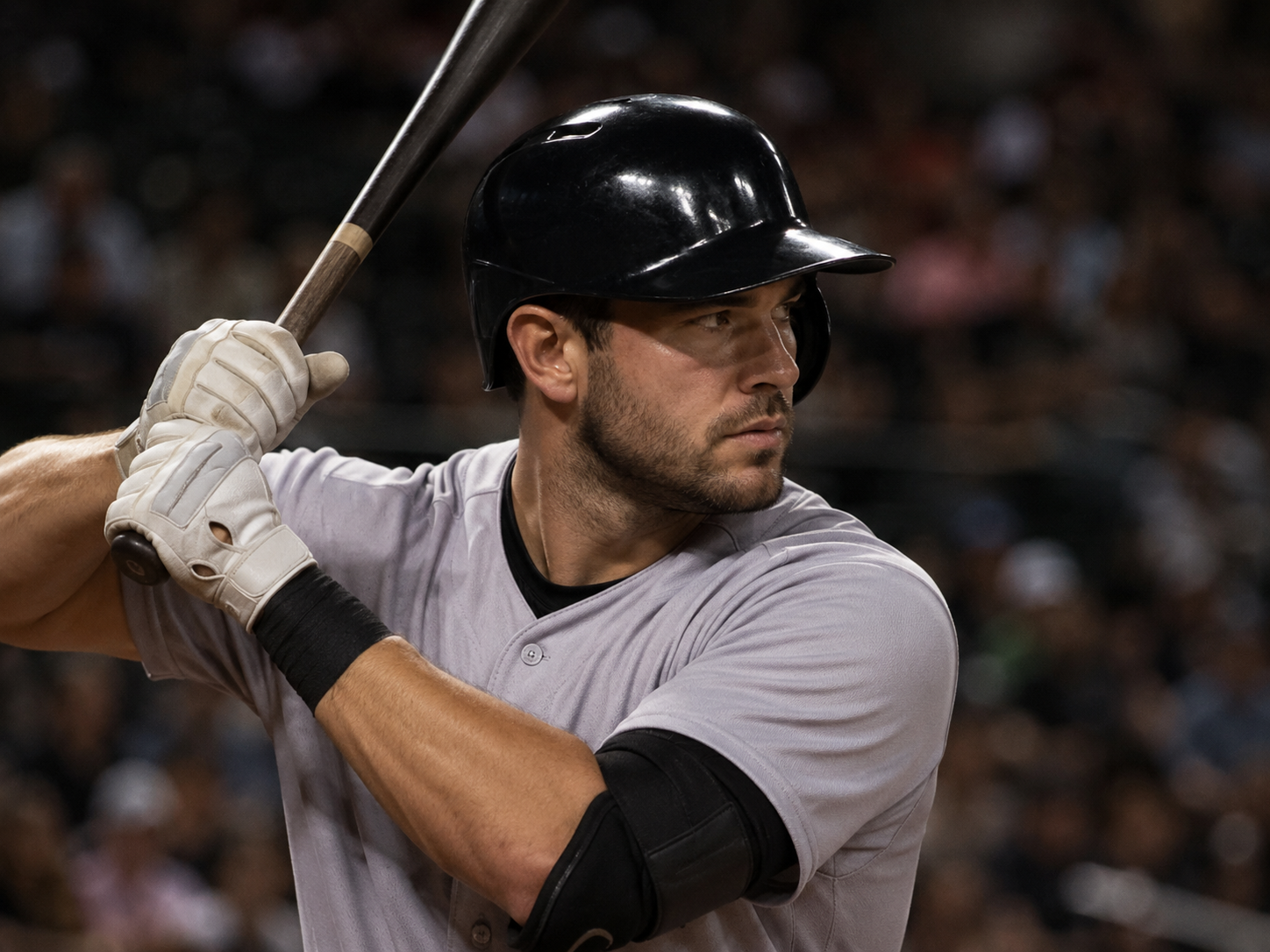
Baseball makes the problem obvious. A hitter can possess tremendous bat speed, strength and rotational power and still be unable to hit Major League pitching. The competitive task requires the hitter to extract useful information from the pitcher and ball, narrow the range of likely outcomes, decide whether the pitch deserves a swing and organize a high-speed motor response in less than half a second. Research comparing baseball players with non-players suggests that expertise involves more than a generic ability to respond quickly. Skilled hitters appear better able to use early information and couple perception to an appropriate action, including the equally important ability not to swing. One baseball study found that information from the first 100 milliseconds of ball flightcontributed differently to expert anticipation, while EEG work has identified expertise-related differences during a baseball-specific Go/No-Go task.
That is why "reaction time" is often too shallow a description of what elite performers are doing. A quarterback is not simply waiting for a stimulus and responding faster than everyone else. He is interpreting defensive structure, weighting relevant cues, anticipating movement and selecting among competing actions while the environment is changing. The elite athlete may not simply react faster. The more defensible version is that expertise can allow an athlete to recognize which information matters earlier and use that information more effectively. That distinction has been a recurring finding in perceptual-cognitive expertise research.
Don't Call Everything Reaction Time
Simple reaction time measures how quickly someone responds to a predictable stimulus with a predetermined response. Sport rarely provides that luxury. Choice reaction, response inhibition, selective attention, anticipation, visual search, pattern recognition and decision-making all ask different questions. In baseball, Kida and colleagues found that intensive practice was associated with improvement in a Go/No-Go decision task while simple reaction time remained essentially unchanged, which is exactly why shaving milliseconds off a generic light-board score cannot automatically be treated as evidence of becoming a better hitter.
The same caution applies to the broader category of "cognition." A Stroop task can provide information related to interference or inhibitory control. A Psychomotor Vigilance Test can assess sustained vigilant attention and is particularly sensitive to sleep loss, extended wakefulness and fatigue-related lapses. Neither is a baseball test. Neither tells us whether a quarterback can identify Cover 3. Those tests can still be useful if we remain precise about the construct being measured.
If It Matters, Can We Measure It?
A useful way to think about cognitive assessment is as a spectrum from general cognitive measures, through perceptual-cognitive measures, to actual sport performance. At the general end, a PVT can show whether vigilant attention has changed from an athlete's own baseline. In 98 elite athletes, natural variation in sleep affected psychomotor vigilance (click here to try out the Newman HP PVT training app) more clearly than the sport-specific performance measures collected alongside it, illustrating both the potential value and the limitation of the test: it detected something real without pretending to represent the entire competitive task. A Stroop task can probe interference control (Click here to try out the Newman HP Stroop training app). Multiple-object tracking measures the capacity to monitor several moving targets, and a 2024 meta-analysis found athletes outperform non-athletes on MOT tasks, with experts also outperforming novices. That association is interesting, but it does not establish that MOT ability produced their expertise.
NeuroTracker sits inside that MOT category and is a useful example of why measurement and marketing need to be separated. Athletes can improve substantially on the trained 3D-MOT task, and a 2016 soccer study reported improved passing decisions after training.A later critical systematic review judged the broader transfer evidence weak or mixed, and a 2025 randomized follow-up found improved 3D-MOT performance without improvements in an attention task or on-field soccer performance.
Testing It Does Not Automatically Train It
A test can measure something without repeatedly performing that test being the best way to improve meaningful performance. A test can measure something without repeatedly performing that test being the best way to improve meaningful performance. Cognitive science typically distinguishes near transfer, where training improves the practiced task or a very similar one, from far transfer, where improvement generalizes to something meaningfully different. Broad cognitive-training literature has found much stronger evidence for near transfer than far transfer, and sport researchers have raised the same concern with generic perceptual and cognitive training.
That does not make perceptual-cognitive training useless. It changes how it should be designed. Research on representative learning design and perceptual skill suggests that transfer becomes more plausible when training preserves the information, decisions and perception-action relationships that make the competitive task what it is. Video-based anticipation work, visual occlusion, sport-specific pattern recognition, decision-rich small-sided games and appropriately designed simulations can therefore offer something a generic reaction drill cannot: the athlete still has to discover and act on information that matters in the sport. A hitter identifying pitcher cues and pitch trajectories is practicing a problem much closer to hitting than simply trying to lower a universal reaction-time score.
What Happens When the Athlete Gets Tired?
Competition does not protect decision-making until the athlete is fully recovered. This is where cognitive assessment becomes especially interesting, but "fatigue" needs to remain specific. Sleep restriction, prolonged mental demand and acute physical loading are not interchangeable biological events. PVT research shows strong sensitivity to sleep loss, and athlete data suggest normal sleep variation can alter vigilant attention even when sport-specific outputs appear relatively stable. A 2026 systematic review and meta-analysis found experimentally induced mental fatigue associated with worse sport-related reaction-time, technical and decision-making outcomes, with decision-making showing the most consistent pattern. Physical load is more complicated: a systematic review found that its influence on perceptual-cognitive performance depends on factors such as intensity, task and expertise rather than producing one universal decline. The applied question is therefore more useful than asking whether fatigue "hurts the brain": can this athlete preserve the perception and decision quality their sport demands when the conditions are no longer ideal?
Cognition Is One Piece of an Unfairly Difficult Puzzle
None of this makes cognitive performance the single characteristic separating elite athletes from everyone else. Elite sport eventually becomes an accumulation problem. Once a selection environment has already filtered heavily for physical capacity and technical competence, smaller differences become more consequential. One athlete may extract information more effectively, another may regulate emotion better, and another may simply maintain sleep, nutrition, training quality, technical work, recovery and physical preparation with unusual consistency across a long season. Health and availability determine whether any of those qualities can be expressed at all. Opportunity, coaching and context remain part of the equation as well. The point is not to replace the physical side of performance with a cognitive explanation. It is to recognize another part of the performance system that has historically received far less measurement and deliberate development than strength, speed, power or conditioning.
We already spend enormous effort quantifying what the body can produce. Force plates, timing gates, velocity trackers, GPS systems and laboratory testing have made physical performance increasingly visible. Cognitive and perceptual performance should be approached with the same combination of curiosity and skepticism. Measure the construct you actually care about. Understand what the test can and cannot tell you. Be even more demanding when someone claims that training one task will transfer to competition.
The body still has to execute the play. It may be worth becoming just as curious about the system that has to find the play first.
FAQ
Can reaction time actually be improved?
Some forms of response speed can improve with practice, but "reaction time" is not one universal quality. Simple reaction time, choice reaction time, response inhibition and sport-specific anticipation place different demands on the athlete. Baseball research is instructive because prolonged practice has been associated with faster Go/No-Go responses without corresponding improvements in simple reaction time. Improving the speed and accuracy of choosing the correct response may therefore matter much more than chasing a generic reaction score.
What cognitive skills matter most for athletes?
There is no universal cognitive profile for every sport. Relevant qualities can include attention, inhibition, processing speed, working memory, visual search, anticipation, pattern recognition and response selection, but their importance depends on the competitive problem. A goalkeeper, hitter and distance runner do not interact with information in the same way. The strongest sport-expertise literature generally supports studying the perceptual information and decisions specific to the task rather than assuming one laboratory cognitive score represents athletic intelligence.
How do you measure cognitive performance in athletes?
Measurement can range from general tests such as the PVT or Stroop, to multiple-object tracking and video-based perceptual tests, to gaze assessment, occlusion paradigms and sport-specific decision tasks. The closer a measure moves toward actual competition, the greater its ecological relevance may become, although control and repeatability can become harder. Recent reviews also highlight substantial methodological inconsistency in athlete cognitive testing, which makes standardized administration and within-athlete comparison important.
What does a Psychomotor Vigilance Test measure?
The PVT primarily assesses vigilant attention and the ability to respond consistently to unpredictable stimuli over time. It is well established as being sensitive to sleep deprivation, extended wakefulness, circadian disruption and time-on-task effects. That makes it potentially useful for repeated monitoring when the question concerns alertness or attentional lapses. It should not be interpreted as a measure of game IQ, anticipation or sport-specific decision-making.
Can brain training improve sports performance?
Potentially, but specificity matters enormously. Producing a better score on a cognitive training exercise is not the same as producing a better athlete. Broad cognitive-training evidence shows far transfer is difficult to demonstrate, while sport research gives stronger theoretical and empirical support to training that maintains representative information, anticipation demands and perception-action coupling. That argues for training the decisions athletes actually have to make rather than assuming generic brain games will automatically generalize.
Does fatigue affect decision-making in athletes?
Yes, under some conditions, but different forms of fatigue should not be collapsed together. A 2026 meta-analysis found mental fatigue associated with poorer sport-related decision-making, technical performance and reaction-time outcomes, although confidence and heterogeneity differed across categories. Sleep loss can impair vigilant attention, while the cognitive effect of acute physical load depends more heavily on intensity, task and context. The practical question is which component of performance is changing and why.
Are elite athletes cognitively different from non-elite athletes?
On average, studies and meta-analyses identify differences in several cognitive and perceptual-cognitive measures, especially when tasks contain information relevant to the athlete's expertise. Those findings should not be interpreted as evidence for an innate "elite brain." Years of specialized practice may produce some of the differences, pre-existing characteristics may influence who reaches elite levels, and selection likely involves both along with many other variables. The association is real enough to study but not clean enough to turn into a single causal story.
Talk With Newman HP
References
Mann, D. T. Y., Williams, A. M., Ward, P., & Janelle, C. M. (2007). Perceptual-cognitive expertise in sport: A meta-analysis. Journal of Sport & Exercise Psychology, 29(4), 457–478. https://doi.org/10.1123/jsep.29.4.457
Voss, M. W., Kramer, A. F., Basak, C., Prakash, R. S., & Roberts, B. (2010). Are expert athletes "expert" in the cognitive laboratory? A meta-analytic review of cognition and sport expertise. Applied Cognitive Psychology, 24(6), 812–826. https://doi.org/10.1002/acp.1588
Furley, P., Schütz, L. M., & Wood, G. (2025). A critical review of research on executive functions in sport and exercise. International Review of Sport and Exercise Psychology, 18(1), 316–344. https://doi.org/10.1080/1750984X.2023.2217437
Manci, E., Herold, F., Özdalyan, F., Benli, M. D., Bozkurt, Ç., Gençtürk, U., Gebel, A., Güdücü, Ç., Günay, E., Bediz, C. Ş., Pontifex, M. B., & Muller, N. G. (2025). Determining cognitive performance in athletes: A systematic review focused on methodology of applying cognitive tests. Scandinavian Journal of Psychology, 66, 523–552. https://doi.org/10.1111/sjop.13105
Muraskin, J., Sherwin, J., & Sajda, P. (2015). Knowing when not to swing: EEG evidence that enhanced perception-action coupling underlies baseball batter expertise. NeuroImage, 123, 1–10. https://doi.org/10.1016/j.neuroimage.2015.08.028
Ranganathan, R., & Carlton, L. G. (2007). Perception-action coupling and anticipatory performance in baseball batting. Journal of Motor Behavior, 39(5), 369–380. https://doi.org/10.3200/JMBR.39.5.369-380
Kida, N., Oda, S., & Matsumura, M. (2005). Intensive baseball practice improves the Go/Nogo reaction time, but not the simple reaction time. Cognitive Brain Research, 22(2), 257–264. https://doi.org/10.1016/j.cogbrainres.2004.09.003
Basner, M., Mollicone, D., & Dinges, D. F. (2011). Validity and sensitivity of a brief Psychomotor Vigilance Test (PVT-B) to total and partial sleep deprivation. Acta Astronautica, 69(11–12), 949–959. https://doi.org/10.1016/j.actaastro.2011.07.015
Knufinke, M., Nieuwenhuys, A., Maase, K., Moen, M. H., Geurts, S. A. E., Coenen, A. M. L., & Kompier, M. A. J. (2018). Effects of natural between-days variation in sleep on elite athletes' psychomotor vigilance and sport-specific measures of performance. Journal of Sports Science & Medicine, 17(4), 515–524.
Diamond, A. (2013). Executive functions. Annual Review of Psychology, 64, 135–168. https://doi.org/10.1146/annurev-psych-113011-143750
Liu, H. J., Zhang, Q., Chen, S., Zhang, Y., & Li, J. (2024). A meta-analysis of performance advantages on athletes in multiple object tracking tasks. Scientific Reports, 14, 20086. https://doi.org/10.1038/s41598-024-70793-w
Vater, C., Gray, R., & Holcombe, A. O. (2021). A critical systematic review of the NeuroTracker perceptual-cognitive training tool. Psychonomic Bulletin & Review, 28(5), 1458–1483. https://doi.org/10.3758/s13423-021-01892-2
Romeas, T., Guldner, A., & Faubert, J. (2016). 3D-Multiple Object Tracking training task improves passing decision-making accuracy in soccer players. Psychology of Sport and Exercise, 22, 1–9. https://doi.org/10.1016/j.psychsport.2015.06.002
Romeas, T., Goujat, M., Faubert, J., & Labbé, D. (2025). No transfer of 3D-Multiple Object Tracking training on game performance in soccer: A follow-up study. Psychology of Sport and Exercise, 76, 102770. https://doi.org/10.1016/j.psychsport.2024.102770
Sala, G., Aksayli, N. D., Tatlidil, K. S., Tatsumi, T., Gondo, Y., & Gobet, F. (2019). Near and far transfer in cognitive training: A second-order meta-analysis. Collabra: Psychology, 5(1), 18. https://doi.org/10.1525/collabra.203
Fransen, J. (2024). There is no supporting evidence for a far transfer of general perceptual or cognitive training to sports performance. Sports Medicine, 54, 2717–2724. https://doi.org/10.1007/s40279-024-02060-x
Broadbent, D. P., Causer, J., Williams, A. M., & Ford, P. R. (2015). Perceptual-cognitive skill training and its transfer to expert performance in the field: Future research directions. European Journal of Sport Science, 15(4), 322–331. https://doi.org/10.1080/17461391.2014.957727
Pinder, R. A., Davids, K., Renshaw, I., & Araújo, D. (2011). Representative learning design and functionality of research and practice in sport. Journal of Sport & Exercise Psychology, 33(1), 146–155. https://doi.org/10.1123/jsep.33.1.146
Hadlow, S. M., Panchuk, D., Mann, D. L., Portus, M. R., & Abernethy, B. (2018). Modified perceptual training in sport: A new classification framework. Journal of Science and Medicine in Sport, 21(9), 950–958. https://doi.org/10.1016/j.jsams.2018.01.011
Zhu, R., Zheng, M., Liu, S., Guo, J., & Cao, C. (2024). Effects of perceptual-cognitive training on anticipation and decision-making skills in team sports: A systematic review and meta-analysis. Behavioral Sciences, 14(10), 919. https://doi.org/10.3390/bs14100919
Lu, Q., Liu, D., Chen, X., Wang, J., Song, Y., & Chai, Y. (2026). Effects of mental fatigue on sport-related reaction-time, technical, and decision-making performance: A systematic review and meta-analysis. BMC Psychology. https://doi.org/10.1186/s40359-026-04900-z
Schapschröer, M., Lemez, S., Baker, J., & Schorer, J. (2016). Physical load affects perceptual-cognitive performance of skilled athletes: A systematic review. Sports Medicine - Open, 2(1), 37. https://doi.org/10.1186/s40798-016-0061-0
