
The Next Step in Executive Health
For busy executives, health and fitness can get neglected because it is crowded out by demanding schedules, frequent travel, long days, family obligations, and the constant pressure to make decisions for everyone else. Exercise becomes inconsistent, sleep gets compressed, meals become whatever is convenient, and routine care is easy to postpone when nothing feels urgently wrong. Over time, the difficulty is not recognizing the importance of health. It is knowing which areas deserve attention first.
A useful place to begin is by establishing a clear picture of where you are today. Blood testing can identify medical risks and establish important baselines. DEXA can provide information about bone density and body composition. Cardiovascular and exercise testing can show how the body responds to physical demand. Together, the right assessments replace guesswork with a clearer understanding of current health and capability.
Once the results arrive, a new set of questions begins. Which findings are most urgent to address? What should change in training, nutrition, sleep, recovery, or medical care? Testing establishes where you are. The next step is understanding what the results mean, deciding what to do with them, and determining whether the plan is working.
Good Testing Creates Better Questions
A day of comprehensive testing can be genuinely useful. The results may confirm something you already suspected, reveal an issue you had not considered, or simply give you a clearer picture of your present health. The results give valuable information, but it naturally leads to the next set of questions: How often should you train? Which types of training should be the focus given your history, schedule, injuries, and current capacity? How should the program progress? What should you do when travel or a difficult workweek interrupts the routine? When should you measure again, and what result would indicate that the approach is working? The response always needs to be individualized.
Treat Your Health Information Like Business Information
Executives already understand how valuable accurate information can be. A strong quarterly report or audit helps leaders see what is happening, identify risks, and make better decisions. Health information works in much the same way. Testing establishes where you stand. Interpretation helps identify which findings matter. Planning turns those findings into action. Follow-up shows whether the approach should continue or change. The audit itself is valuable because it creates clarity, but its greatest value comes from helping the business decide what deserves attention now, what can be monitored, and what the next move should be.
The plan also needs to reflect the life the person actually leads. A recommendation can be evidence-based and still be unrealistic for someone who travels frequently, manages an unpredictable calendar, has previous injuries, or has only a few hours each week available for training. Aerobic activity, strength, sleep, nutrition, recovery, and medical care may all matter, but they will not carry the same priority for everyone. The sophistication lies in identifying what matters most, applying the right intervention at a realistic dose, and adjusting it as circumstances change. Just as a strong business strategy uses the facts from an audit to build a plan around the company’s current needs, resources, and capabilities, a strong health plan should be built around the person who actually has to carry it out.
Measure What Connects to an Outcome
Blood work and body-composition testing can be highly useful. They may identify risk, establish a baseline, monitor an existing condition, or guide treatment and training. The right test depends on the person, their history, and the question that needs to be answered. More data is not always necessary, but the right data can create the clarity needed to make a better decision.
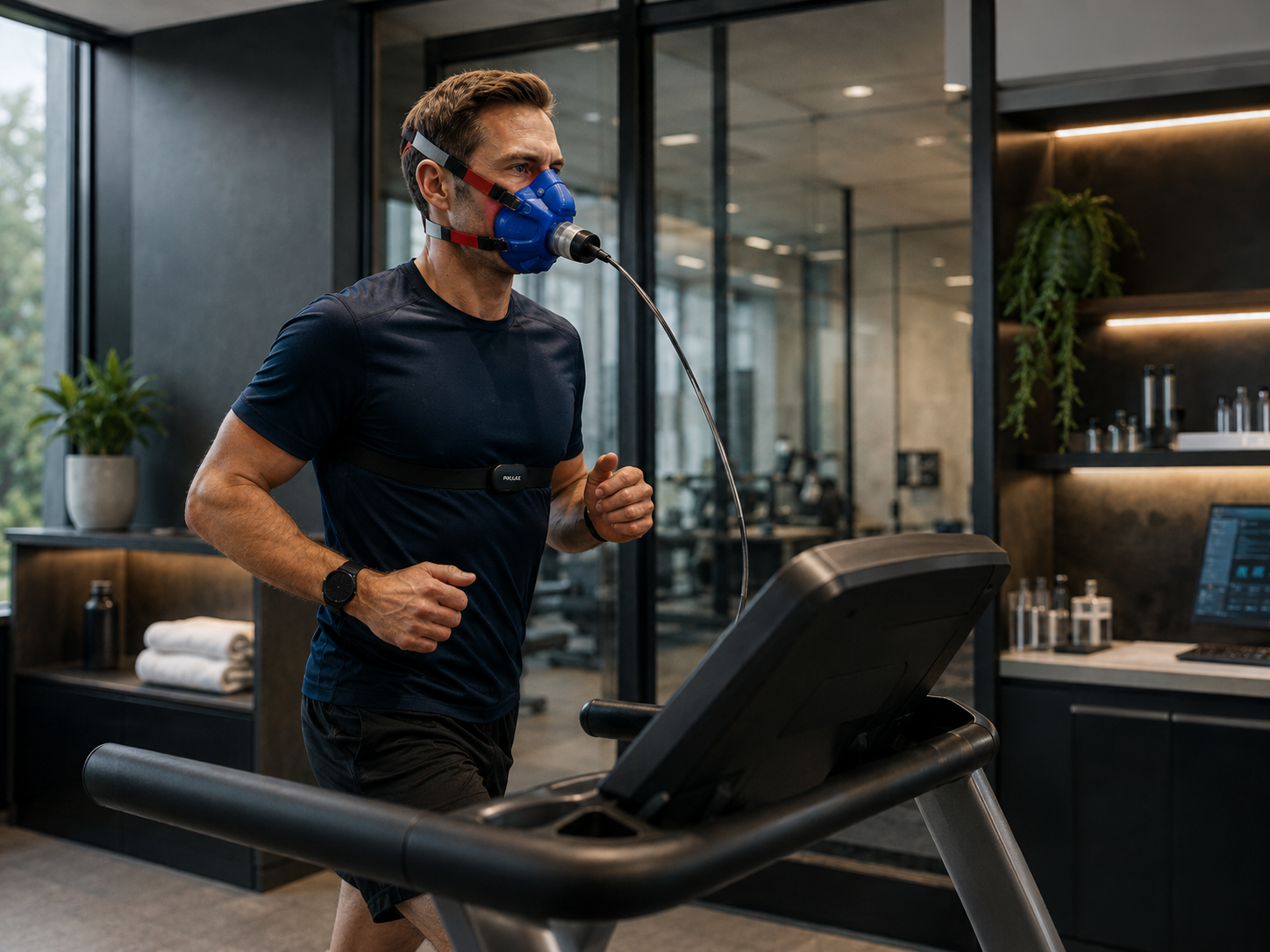
Cardiorespiratory fitness is a useful example of a measurement that connects clearly to an outcome. It reflects the ability of the circulatory and respiratory systems to supply oxygen during sustained physical activity. The American Heart Association has argued that cardiorespiratory fitness should be considered a clinical vital sign because of its strong relationship with health outcomes and the information it can add beyond many traditional risk factors.
A large 2018 cohort study followed 122,007 adults who completed exercise treadmill testing at the Cleveland Clinic. Over a median follow-up of 8.4 years, higher cardiorespiratory fitness was associated with lower all-cause mortality. The lowest-fitness group carried a mortality risk comparable to or greater than several familiar clinical risk factors, including coronary artery disease, smoking, and diabetes. The researchers found no observed upper limit of benefit within the population studied.
The study was observational, meaning that it demonstrated a strong association rather than proving that higher fitness directly caused the reduction in mortality. Participants had also been referred for treadmill testing and were not a random cross-section of the general population. Even with those limitations, the practical takeaway is meaningful: cardiorespiratory fitness is closely associated with long-term health and is directly trainable.
This makes it particularly useful within a broader health plan. It describes present capacity, relates to an outcome that matters, and can change in response to consistent effort. The measurement establishes a starting point. A training plan provides the intervention. Reassessment shows whether that intervention is working. It is a clear example of testing and management complementing one another.
Sleep is another area where measurement can be useful, but the numbers need context. The American Academy of Sleep Medicine notes that healthy sleep involves duration, quality, timing, regularity, and the absence of sleep disorders.Wearables can help identify patterns, but they are not a substitute for clinical evaluation or validated diagnostic testing. The goal is not to chase a perfect sleep score. It is to determine whether sleep is limiting health and performance and what action should follow.
What a Complete Executive Health Process Can Include
A thorough approach to executive health begins by understanding the whole picture: medical history, current risks, symptoms, training background, sleep, nutrition, stress, travel, schedule, and the outcomes that matter to the individual. This context allows test results to be interpreted appropriately and helps prevent one number from being given more significance than it deserves.
The findings can then be prioritized. Not every result requires immediate action, and not every abnormal number means that something is seriously wrong. Some findings deserve attention now, some can be monitored, and others may require evaluation by a physician or specialist. Clear prioritization prevents someone from feeling that everything needs to change at once.
The next step is translating the priorities into a practical plan. "Exercise more," "improve your sleep," and "reduce your stress" are loose goals, but they are not instructions. A useful plan clarifies what to do, how often to do it, how the approach should progress, and how it can be adjusted when life becomes unpredictable. There also needs to be a follow-up. There needs to be a way to determine whether the plan was completed, how the body responded, what obstacles appeared, and whether the original approach still makes sense. That review should lead to a decision: continue, progress, modify, investigate further, or stop.
For anyone considering an executive health program, a useful question is: What support is available after the results come back? Who will review the findings with you? How will priorities be established? Can someone help translate them into a plan? When will progress be reassessed? What happens if the first approach does not work or a result requires additional medical attention?
There is no wrong first step in taking your health more seriously. Getting appropriate testing, scheduling a physical, beginning to exercise, or simply asking better questions can all move someone in the right direction. A starting point carries no judgment. It simply shows where progress begins and provides a place to build from. For executives who have health information and want help deciding what it means, what deserves attention, and what to do next, our contact page is available where a conversation would be useful.
FAQs
Are blood panels and DEXA scans worth the money?
They can be valuable when they are appropriate for the individual and interpreted in context. Blood testing may help identify or monitor specific medical risks, while DEXA can provide useful information about bone density and body composition. Even when testing does not reveal an urgent problem, establishing a baseline may help guide future decisions. Before completing a test, it is useful to understand what question it is intended to answer. Afterward, ask who can help interpret the result, whether it should change anything you are doing, and when it might be appropriate to reassess.
What should I do if I have already completed testing but do not have a plan?
Start by recognizing that you have already taken a useful step. Gather your results and review them with a qualified professional who can consider them alongside your medical history, symptoms, schedule, and goals. The next task is not to act on every number at once. It is to identify the one or two findings that matter most, determine what actions are appropriate, and establish a reasonable time for follow-up.
What is the single most important health metric to track?
No single metric replaces individualized medical care, but cardiorespiratory fitness is one of the strongest broad indicators of long-term health available. It can be directly measured through cardiopulmonary exercise testing or estimated through validated treadmill and field tests. It is strongly associated with mortality risk and, unlike age, genetics, or family history, can improve through training. For many people, it offers a useful connection between current capacity, future risk, and the actions that can improve both.
What is a realistic VO₂ max target for someone in their 40s?
According to a 2015 Mayo Clinic Proceedings study that established U.S. reference standards for cardiorespiratory fitness, a useful goal is to be at least the top 25% for your age and sex. That starts at about 55.2 for men and 44.7 for women in their 20s; 49.2 and 36.1 in their 30s; 45.0 and 32.4 in their 40s; 39.7 and 27.6 in their 50s; 34.5 and 23.8 in their 60s; and 30.4 and 20.8 in their 70s.
Where should I start if I do not have a large budget for clinics and testing?
Begin with routine preventive care and a conversation with your physician about your history and risk factors. From there, define what you want your body to remain capable of doing and build consistent habits around aerobic activity, strength training, sleep, and nutrition. Testing can be added selectively when it answers a meaningful question, identifies a risk, establishes a useful baseline, or changes the plan. The fundamentals are not a lesser version of health optimization. They are the foundation that gives more advanced testing and interventions their value.
This article is for general education and is not medical advice. Decisions involving symptoms, medications, laboratory findings, medical conditions, or exercise safety should be made with a qualified healthcare professional.
Talk With Newman HP
References
Mandsager K, Harb S, Cremer P, et al. Association of cardiorespiratory fitness with long-term mortality among adults undergoing exercise treadmill testing. JAMA Network Open. 2018;1(6):e183605. doi:10.1001/jamanetworkopen.2018.3605.
Ross R, Blair SN, Arena R, et al. Importance of assessing cardiorespiratory fitness in clinical practice: A case for fitness as a clinical vital sign: A scientific statement from the American Heart Association. Circulation. 2016;134(24):e653-e699. doi:10.1161/CIR.0000000000000461.
Kaminsky LA, Arena R, Myers J. Reference standards for cardiorespiratory fitness measured with cardiopulmonary exercise testing: Data from the Fitness Registry and the Importance of Exercise National Database. Mayo Clinic Proceedings. 2015;90(11):1515-1523. doi:10.1016/j.mayocp.2015.07.026.
Shepherd JA, Ng BK, Sommer MJ, Heymsfield SB. Body composition by DXA. Bone. 2017;104:101-105. doi:10.1016/j.bone.2017.06.010.
Ramar K, Malhotra RK, Carden KA, et al. Sleep is essential to health: An American Academy of Sleep Medicine position statement. Journal of Clinical Sleep Medicine. 2021;17(10):2115-2119. doi:10.5664/jcsm.9476.
Khosla S, Deak MC, Gault D, et al. Consumer sleep technology: An American Academy of Sleep Medicine position statement. Journal of Clinical Sleep Medicine. 2018;14(5):877-880. doi:10.5664/jcsm.7128.
