
The Ancore Story
Listen To This Episode on the High Performance Files Podcast - Click Here
How a Simple Idea Could Change Resistance Training
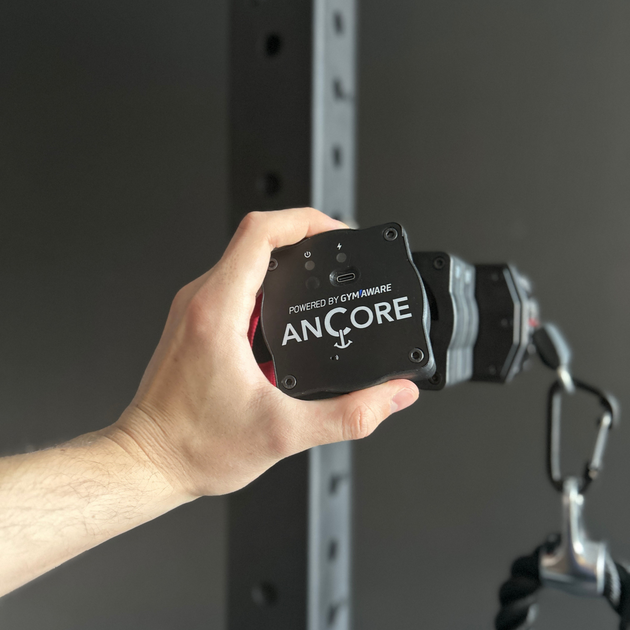
Most cable machines have followed the same basic formula for decades. Weight stacks, pulleys, large frames, and a permanent footprint in the weight room. Isaac Lewis saw an opportunity to rethink that model. On a recent episode of the Newman HP Podcast, The High Performance Files, Lewis shared the story behind Ancore, a portable cable machine built to create smooth, adjustable resistance without the traditional cable stack. What started as an idea in Boston eventually became an engineering challenge, a startup journey, and an inspiring example of relentless innovation.
Solving the Right Problem
The idea behind Ancore was not simply to make a cable machine smaller. The goal was to preserve what makes cable training useful while removing many of the limitations that come with traditional equipment. Portability mattered and versatility mattered, but the resistance still had to feel right. As Lewis explained, “It has to be smooth, no bumps.” That simple standard created a much more complicated engineering problem than just shrinking down a cable machine.
The solution eventually centered around a torsion spring mechanism. Rather than relying on a traditional weight stack, Ancore uses a completely different resistance system designed to maintain the smooth feel athletes, coaches, and clinicians expect. “Most cable machines are the same, ours is different,” Lewis said. Getting to that point required repeated experimentation, testing, and rebuilding. Like most good ideas, the finished product looks a lot simpler than the process it took to create it.
Innovation Requires Relentlessness
Building new fitness equipment is difficult under normal circumstances. Trying to build a company through the uncertainty of COVID-19 added another level of complexity. There were plenty of reasons to slow down, second-guess the idea, or move on entirely, but Lewis and his team kept developing the product, solving engineering problems, and finding ways to get Ancore into the hands of real users.
That relentlessness was one of the biggest themes from the conversation. Innovation usually gets presented as one big breakthrough moment, but the reality is much less glamorous. A prototype does not work, so you change it. The next version is better, but now there is another problem. You test it, adjust it, and go again. The Ancore story is a reminder that the real advantage is often simply being willing to stay with the problem longer than everyone else.
Letting the Customer Expand the Product
One of the most interesting parts of Ancore's growth has been watching customers find uses for the equipment that the original team did not necessarily predict. “Rehab facilities are using it in ways we never imagined,” Lewis said. For coaches and clinicians, that probably sounds familiar. Give someone a useful tool and they are eventually going to find an application that was never in the original instruction manual.
That has become part of Ancore's product development process. Instead of assuming every possible use was identified during design, the company has been able to learn from the athletes, coaches, and rehabilitation professionals actually using the product. Lewis also discussed the importance of customer service, personal touches, and building real relationships along the way. In a crowded fitness industry, the product may get someone's attention, but the experience around the product plays a major role in whether the brand actually grows.
What Comes Next
Ancore's story continues to develop. The company is looking beyond a single product and exploring opportunities to expand into additional training modalities. The same ideas that helped build the original cable system remain central to that process: identify a real problem, experiment relentlessly, and listen closely to the people actually using the equipment.
The fitness industry is always looking for the next new thing, but the best innovation is not always the most complicated. Sometimes it starts by looking at a piece of equipment everyone has accepted for decades and asking whether it really has to work that way. For Isaac Lewis and Ancore, that question turned into a company.
