
The Shoulder Is the Last Link in the Chain
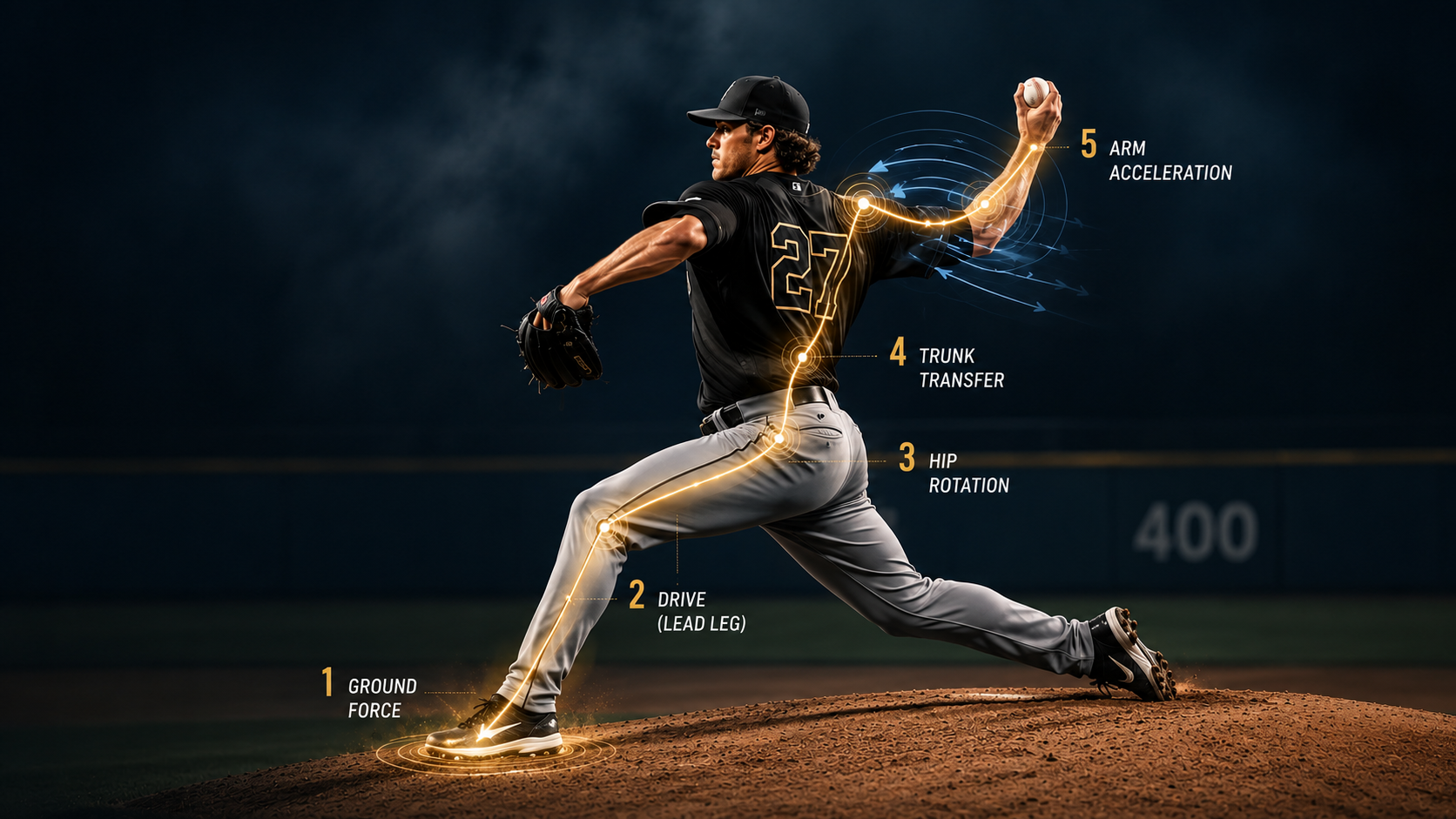
Baseball has never invested more in keeping pitchers healthy. Organizations monitor throwing workloads, analyze mechanics with high-speed motion capture, track recovery through wearable technology, and employ teams of athletic trainers, physical therapists, strength coaches, sports scientists, and orthopedic specialists. Before nearly every bullpen or game, pitchers move through carefully designed arm care routines that have become as much a part of the sport as long toss or the bullpen mound itself. Yet arm injuries remain one of baseball’s defining challenges.
Major League Baseball’s 2024 Report on Pitcher Injuries, which compiled input from more than 200 physicians, researchers, coaches, player-development personnel, and front-office staff, describes a long-term rise in pitcher injuries despite significant advances in sports medicine and performance technology. Although recent in-season injured-list placements have stabilized or declined slightly, injuries have become increasingly concentrated during spring training and the opening weeks of the season. The report also identified the pursuit of velocity, increasingly aggressive pitch design, and maximum-effort throwing as leading concerns. These findings represent expert consensus rather than proven cause-and-effect relationships, but they still raise an uncomfortable question: If pitchers spend more time than ever taking care of their arms, why do shoulder and elbow injuries remain such persistent problems?
Perhaps the issue is not that baseball has ignored arm care, but that the sport has come to define it too narrowly. This is not an argument against shoulder exercises. Healthy rotator cuffs, well-functioning scapular muscles, adequate mobility, and structured recovery remain essential for throwing athletes. The mistake is assuming that because pain often appears in the shoulder, the shoulder must also be the only place worth examining. Pitching is a whole-body movement, and preparing the shoulder without considering the system that delivers force to it is a little like replacing the tires on a car without inspecting the suspension. The tires may display the wear, but they are not the only part determining how the car performs.
Why the Shoulder Gets Blamed
Throwing a baseball is one of the fastest and most demanding movements in sport. Although the shoulder plays a critical role in delivering the ball, much of the energy required for a pitch has already been generated before the arm begins accelerating forward. Researchers describe this process through the kinetic chain, a coordinated sequence in which force is generated against the ground, transferred through the lower body and trunk, and ultimately expressed through the upper extremity. The legs, pelvis, trunk, scapula, shoulder, elbow, and hand do not act as independent parts. They contribute to a single movement in which the timing and contribution of each segment affect what happens farther down the chain. Work by Glenn Fleisig, Ben Kibler, Scott Seroyer, and others has helped establish this systems-based view of overhead throwing, showing that performance depends on how efficiently these segments work together rather than on the shoulder in isolation.
This perspective changes how shoulder pain should be interpreted. Pain tells us where symptoms are occurring, but it does not necessarily identify every factor that contributed to them. For one pitcher, discomfort may primarily reflect irritation within the local tissues. For another, cumulative throwing volume, inadequate recovery, previous injury history, sudden changes in workload, or inefficiencies elsewhere in the delivery may have gradually increased the demands placed on the shoulder. Most injuries cannot be explained by one cause, which is why evaluating only the painful area often provides an incomplete picture.
The kinetic-chain framework encourages coaches and clinicians to ask broader questions. Is the athlete physically prepared for the demands of the current workload? Are force and momentum being transferred efficiently through the body? Has throwing volume or intensity increased abruptly? Is the pitcher recovering sufficiently between high-stress exposures? None of these questions diminish the importance of the shoulder. They recognize that keeping the shoulder healthy often requires understanding the pitcher as an integrated system rather than as a collection of individual joints.
The Lead Side Does More Than Catch the Body
One of the most overlooked moments in the pitching delivery occurs shortly after the lead foot contacts the ground. By this point, the pitcher has already generated substantial forward momentum. The lead leg must accept that momentum while continuing to apply force into the ground, creating a stable base from which the pelvis and trunk can continue rotating. Rather than functioning as a passive brake, the stride leg helps absorb and redirect force as the throw unfolds.
Research has shown that stride-leg ground-reaction forces and lead-knee mechanics are associated with ball velocity, suggesting that the lead side plays an important role in transferring energy through the kinetic chain. These findings help explain why high-level pitchers often appear to rotate over a stable front side. They should not, however, be interpreted as proof that one specific lead-leg strategy prevents shoulder injuries. Performance and injury are connected, but evidence that a movement characteristic supports velocity does not automatically prove that it reduces injury risk.
For coaches, the practical lesson is not simply that pitchers need stronger legs or a larger squat. The goal is to develop athletes who can control the positions and forces pitching demands. Can the pitcher accept force on one leg? Can they rotate over the front side without losing posture or control? Can they continue to demonstrate those qualities late in an outing, when fatigue begins to alter the delivery? Training lower-body strength, single-leg control, and movement quality does not replace traditional shoulder maintenance. It complements it by expanding the physical foundation from which the athlete throws. These qualities cannot guarantee injury prevention, but they are consistent with preparing the body for one of the most demanding repetitive actions in sport.
Throwing Hard Requires the Body to Slow It Down
Velocity receives most of the attention in modern baseball. Radar guns are everywhere, velocity gains are celebrated, and entire offseason programs are built around throwing the ball harder. Far less attention is paid to what happens after the baseball leaves the hand, when the arm must rapidly decelerate and the rest of the body must help dissipate the momentum produced during the throw.
During deceleration, the muscles of the rotator cuff and upper back generate substantial force to slow the arm while the trunk and lower body continue moving. Classic biomechanical work by Glenn Fleisig and colleagues demonstrated that pitching exposes the shoulder and elbow to considerable rotational and distraction forces. Werner and colleagues later reported peak shoulder distraction forces averaging approximately the pitcher’s body weight during professional pitching. These loads are not mechanical abnormalities. They are part of throwing a baseball at a high level.
That distinction matters because injury prevention is often framed as a process of reducing stress. High-performance pitching, however, will always involve substantial mechanical stress. The objective is not to eliminate those forces but to develop an athlete who can tolerate them repeatedly. Higher pitch velocities are generally associated with greater joint loading, although the relationship varies between pitchers and is influenced by mechanics, body size, pitch type, and individual movement strategies. Velocity alone does not determine whether a pitcher gets hurt, but pursuing greater performance without proportionally improving physical preparation may leave the athlete less capable of tolerating the demands being created.
The same principle applies across a season. Throwing volume, intensity, sleep, nutrition, previous exposure, and the time available for recovery all affect how an athlete responds to training. A well-designed shoulder routine cannot reasonably be expected to offset poorly managed workloads, inadequate recovery, abrupt spikes in throwing intensity, or repeated pitching through fatigue. Local shoulder preparation matters, but it operates within a much larger training environment.
What Complete Arm Care Looks Like
A comprehensive arm care program still begins with the shoulder. Rotator cuff strength and endurance, scapular function, thoracic mobility, and appropriate recovery remain foundational components of preparing a throwing athlete. Recent systematic reviews suggest that multicomponent prevention programs, including shoulder-strengthening exercises, may reduce throwing injuries. The overall quality of the evidence remains limited, however, and the programs showing benefits typically combine several interventions rather than relying on one exercise or isolated routine.
From there, the focus should broaden to the athlete’s overall capacity for pitching. That includes lower-body strength, single-leg control, trunk strength, movement quality, progressive throwing exposure, and appropriate monitoring of workload and recovery. None of these qualities guarantees that an injury will not occur, but together they improve the foundation from which the pitcher performs. The body adapts to the tasks it repeatedly encounters, and throwing is among the most physically demanding tasks in sport. Preparation should therefore extend beyond the tissues that happen to become sore.
This is closely related to the distinction between overuse and under-preparation. Pain is often attributed entirely to doing too much, but another possibility is that the athlete has not yet developed enough capacity for the work being demanded. In many cases, both factors may be present. Capacity is built gradually through intelligent strength training, progressive throwing exposure, sufficient recovery, and enough time for adaptation to occur. It is not produced by one corrective exercise performed before a bullpen.
Recovery deserves the same broad perspective. It should not be defined only by expensive technology, elaborate routines, or passive treatments. Recovery is the process that allows the athlete to adapt to training and become prepared for the next exposure. Sleep, nutrition, hydration, and thoughtful workload management remain central to that process. Direct shoulder work is still essential, but it is most effective when supported by an athlete whose entire body and training plan are prepared for the demands of pitching.
Healthy Throwers, Not Just Healthy Shoulders
For years, arm care has become almost synonymous with shoulder exercises. The association is understandable because the shoulder is where many pitchers first notice fatigue, soreness, or discomfort. Maintaining the strength, endurance, and function of the shoulder should remain a central part of every throwing program. Pitching, however, has never been a shoulder exercise. It is a whole-body athletic movement that depends on how efficiently force is generated, transferred, expressed, and eventually absorbed.
The shoulder plays a critical role within that sequence, but it performs that role most effectively when the rest of the system is prepared to share the demands of throwing. The next advance in arm care may not come from another band exercise or recovery device. It may come from expanding how arm care is defined: not as a small collection of exercises for the shoulder, but as the larger process of preparing the entire athlete for the demands of pitching. The objective is not merely to create healthier shoulders. It is to create healthier, better-prepared throwers.
Frequently Asked Questions
Should pitchers still perform rotator cuff exercises?
Yes. Rotator cuff strengthening and endurance exercises remain important components of shoulder health. Current evidence suggests that they are most useful when included within a comprehensive injury-reduction program rather than treated as a stand-alone solution.
Can improving lower-body strength prevent shoulder injuries?
There is good biomechanical evidence that the lower body contributes to force production and transfer during pitching. Current research has not demonstrated that improving lower-body strength by itself prevents shoulder injuries. It should be viewed as one component of comprehensive physical preparation.
Does throwing harder increase injury risk?
Higher pitch velocities are generally associated with greater loading at the shoulder and elbow, but injury risk is multifactorial. Workload, recovery, previous injury, physical preparation, mechanics, and individual anatomy may all contribute. Velocity is one part of the picture rather than a complete explanation.
What is the most important part of an arm care program?
There is probably no single most important exercise or component. The strongest approach combines direct shoulder preparation, progressive workload management, whole-body strength training, sufficient recovery, and gradual exposure to the demands of throwing. Arm care is best understood as a system rather than a routine.
References
Bakshi, N. K., Inclan, P. M., Kirsch, J. M., Bedi, A., Agresta, C., & Freehill, M. T. (2020). Current workload recommendations in baseball pitchers: A systematic review. The American Journal of Sports Medicine, 48(1), 229–241.
Dowling, B., Manzi, J. E., Raab, G., Coladonato, C., Dines, J. S., & Fleisig, G. S. (2024). The relationship among lead knee extension, fastball velocity and elbow torque in professional baseball pitchers. Sports Biomechanics, 23(12), 2664–2674.
Fleisig, G. S., Barrentine, S. W., Escamilla, R. F., & Andrews, J. R. (1996). Biomechanics of overhand throwing with implications for injuries. Sports Medicine, 21(6), 421–437.
Karasuyama, M., Tsuruta, T., Kawakami, J., Oike, T., Uchida, K., & Minamikawa, T. (2024). Preventive interventions for throwing injuries in baseball players: A scoping review. Journal of Shoulder and Elbow Surgery, 33(8), e451–e458.
Kibler, W. B., Sciascia, A., & Wilkes, T. (2012). Scapular dyskinesis and its relation to shoulder injury. Journal of the American Academy of Orthopaedic Surgeons, 20(6), 364–372.
Major League Baseball. (2024). Report on pitcher injuries.
McNally, M. P., Borstad, J. D., Oñate, J. A., & Chaudhari, A. M. W. (2015). Stride leg ground reaction forces predict throwing velocity in adult recreational baseball pitchers. Journal of Strength and Conditioning Research, 29(10), 2708–2715.
Nicholson, K. F., Hulburt, T. C., Beck, E. C., Waterman, B. R., & Bullock, G. S. (2020). The relationship between pitch velocity and shoulder distraction force and elbow valgus torque in collegiate and high school pitchers. Journal of Shoulder and Elbow Surgery, 29(12), 2661–2667.
Seroyer, S. T., Nho, S. J., Bach, B. R., Jr., Bush-Joseph, C. A., Nicholson, G. P., & Romeo, A. A. (2010). The kinetic chain in overhand pitching: Its potential role for performance enhancement and injury prevention. Sports Health, 2(2), 135–146.
Werner, S. L., Gill, T. J., Murray, T. A., Cook, T. D., & Hawkins, R. J. (2001). Relationships between throwing mechanics and shoulder distraction in professional baseball pitchers. The American Journal of Sports Medicine, 29(3), 354–358.
